
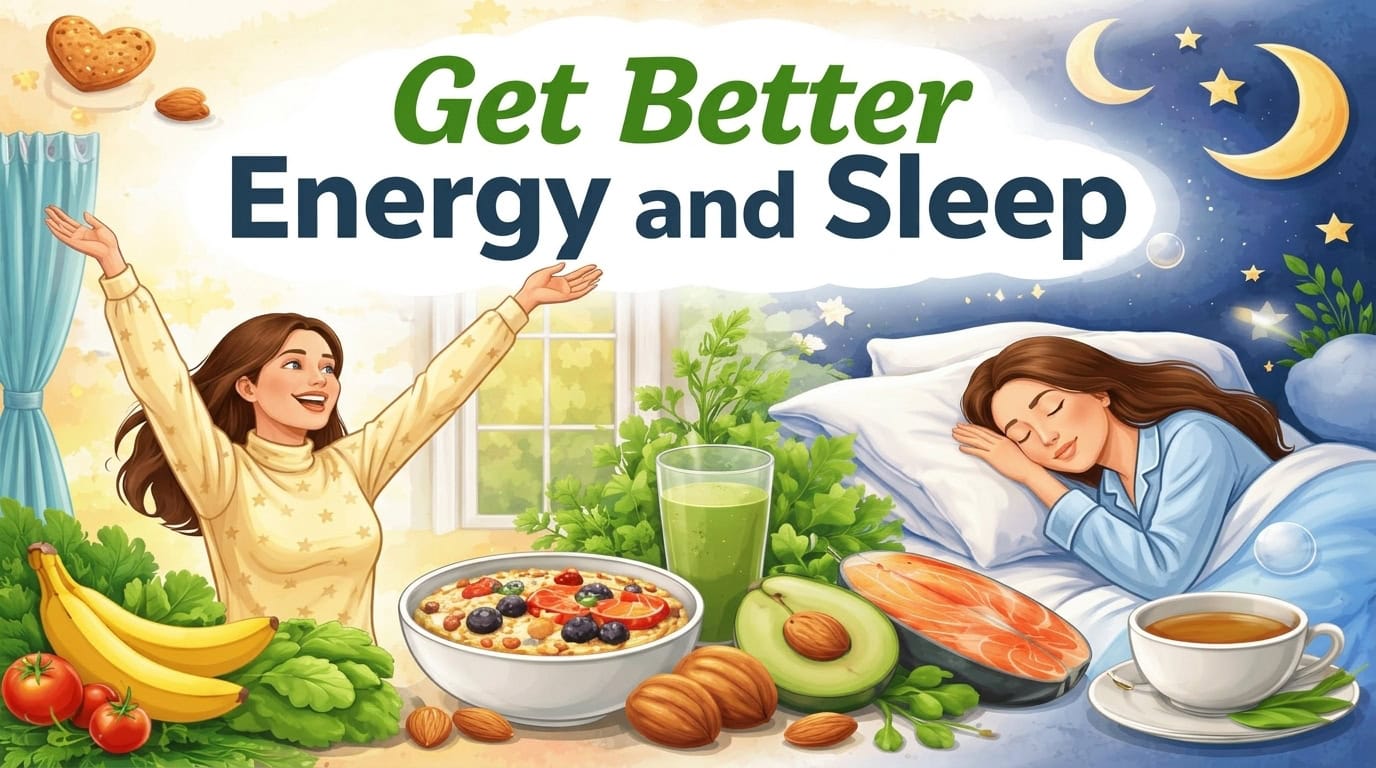
It’s a frustrating feeling when you want to get things done but feel completely drained.
The good news is that there’s an ever-growing body of research suggesting that our nutrition and food choices can actually help to fight fatigue during the day — and can also help us sleep more quickly and soundly at night.
Fatigue can be brought on by different causes like a decrease in physical activity, allergies, or diabetes. But here, we’re focusing specifically on how your food and drink choices can both contribute to—and help solve—fatigue.
1. How Eating at the Right Time Helps
Our bodies have an internal clock that impacts when we sleep and wake up, and this is called our circadian rhythm.
It’s very strongly linked to dark and light cycles — so when it’s lighter outside we tend to feel more awake, and when it’s dark we tend to feel more tired.
Your eating schedule matters too.
Now there’s an emerging field of science called chrononutrition which studies how our eating behaviors can also influence the circadian rhythm.
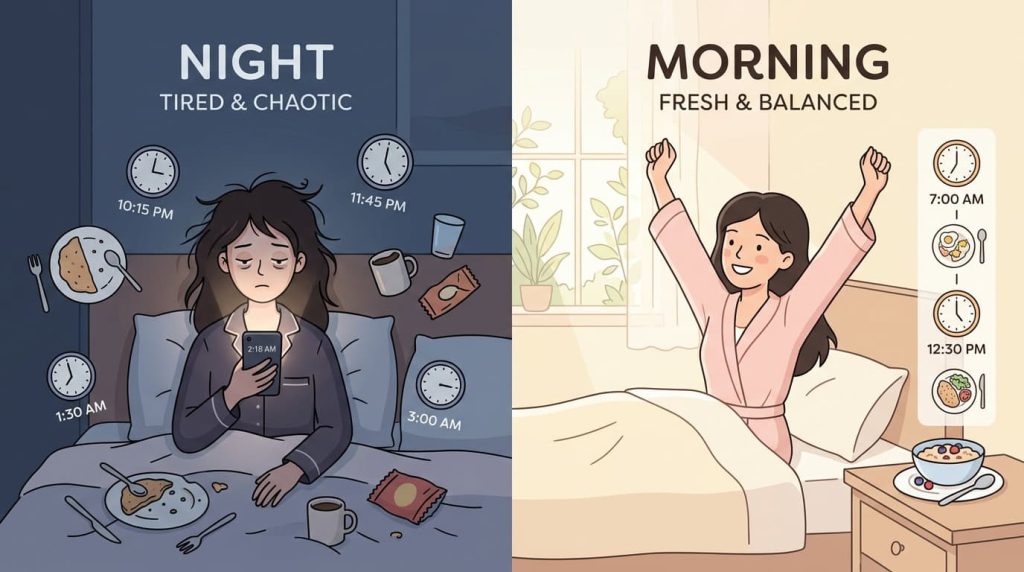
Some recent studies have shown that eating irregularly can throw our circadian rhythm out of sync, which can reduce the quality and duration of our sleep.
So keeping your meals at roughly the same time each day can help your body stay in rhythm—and help you feel less tired overall.
2. Don’t Skip Breakfast
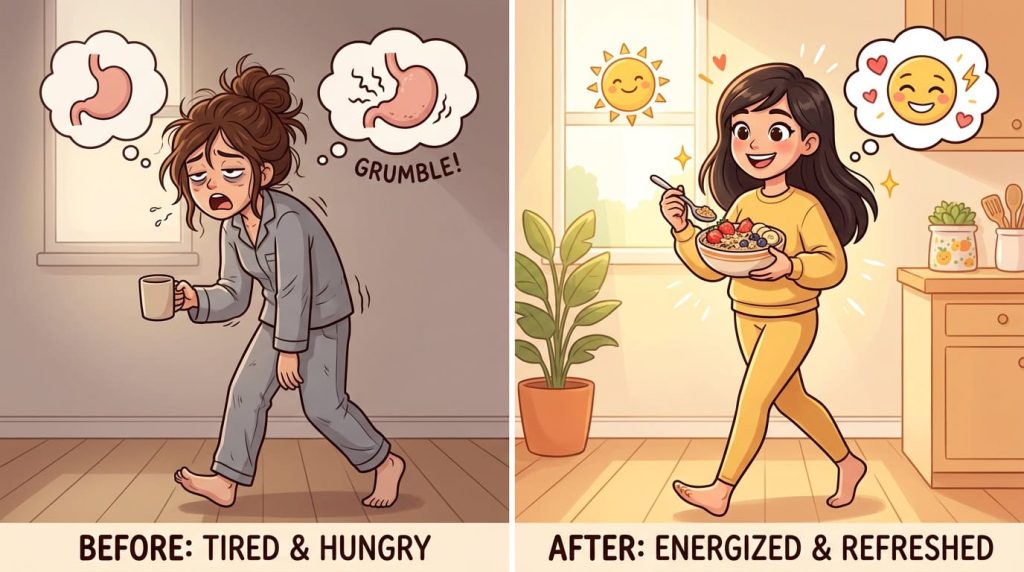
Breakfast isn’t for everyone — and that’s okay. But if you’re someone who kind of feels chronically fatigued throughout the day and you’re also skipping breakfast, this could be part of the reason.
After a full night’s sleep, your body has gone hours without fuel. So when you wake up, your energy stores are naturally a bit depleted. So breaking the fast — which is actually where the word “breakfast” comes from — helps to kick-start our day with some fuel.
There have been several studies showing that those who eat breakfast, especially high-fiber breakfasts, are not only more alert throughout the day but also have improved memory, a more positive mood, and even better bowel movements.
There’s also an interesting study of students that found that those who were skipping breakfast were also the ones reporting that they weren’t sleeping as well at night.
So not only does eating breakfast give us more energy throughout the day, it could potentially also help us sleep better — so it’s a win-win!
3. Build Meals Strategically That Keep You Energized
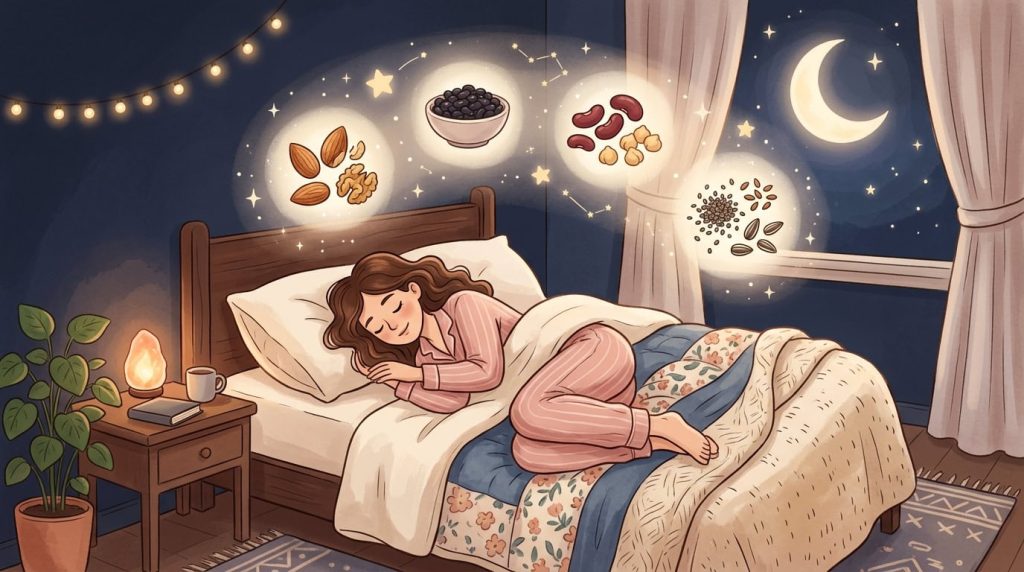
One of the most interesting things about nutrition is that we can very strategically compose our meals to help us feel more alert during the day and to help us fall asleep and better stay asleep at night.
Starting with proteins
A protein is made up of building blocks called amino acids, one of which is tryptophan. Tryptophan gets taken to our brain where it’s absorbed and converted to serotonin — which helps us feel good and calm — and that then gets converted to melatonin, which is the hormone that actually helps our body get ready for sleep. Speaking of hormone, these simple daily habits will help balance your hormones.
Research showed that people who sleep well tend to consume more protein over the day than people who sleep poorly.
Some good sources include:
- Nuts and seeds (cashew, pumpkin, and sunflower seeds)
- Soy
- Beans and legumes
- Leafy greens
- Mushrooms and broccoli
It’s important that we get enough protein to get the tryptophan, but it’s worth noting that you don’t want to get too much — because that’s actually been linked with decreasing sleep quality.
So no need to go out and buy protein powders, as long as you’re following a food-first approach.
Let’s delve into carbs
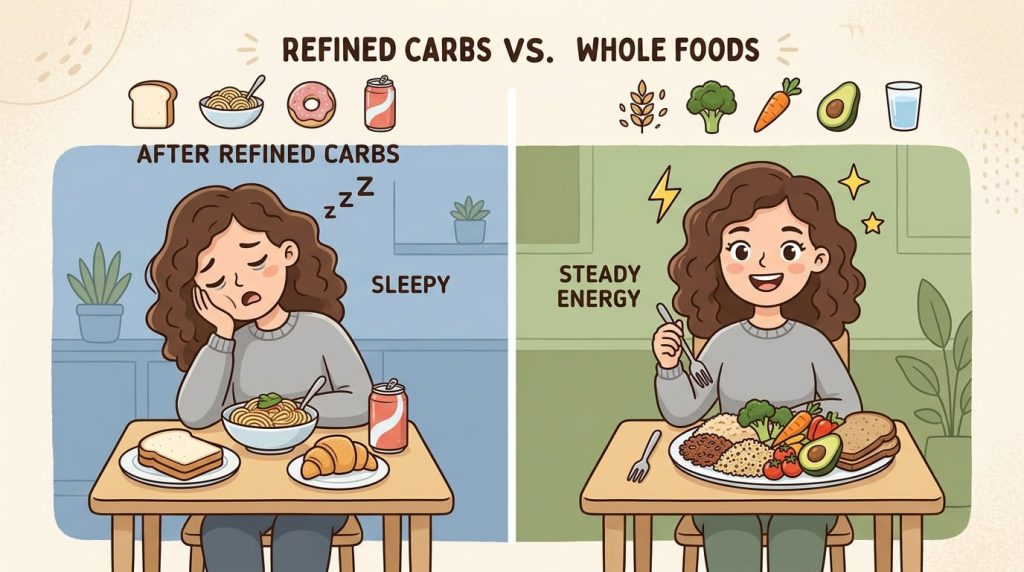
Carbohydrates affect your energy levels depending on how quickly they’re digested.
For simplicity, I’ve broken these into two groups:
- Quick-digesting carbs (like white bread, pasta, or rice) can make you feel more sleepy
- Slow-digesting carbs (like whole grains, legumes, and vegetables) provide more steady energy, and they’re high in fiber.
So why does knowing this matter?
In short, eating quick-digesting carbs increases the amount of tryptophan that gets absorbed into our brain, which increases the chance that we’re going to feel sleepy after eating. And this is what’s so cool — we can use this knowledge to our benefit!
In the evening, we can increase the chances of becoming sleepy a few hours after dinner by having quick carbs with our dinner meal, or by having a piece of fruit with dinner or as an evening snack.
On the other hand, if we want to avoid the after-lunch slump, we can try having slow-digesting carbs with our lunch instead — they give us a more steady and continued release of energy throughout the day.
The takeaway: lean on slow carbs during the day to avoid energy crashes, and quick carbs in the evening can help your body wind down.
5. Key Nutrients That Affect Sleep
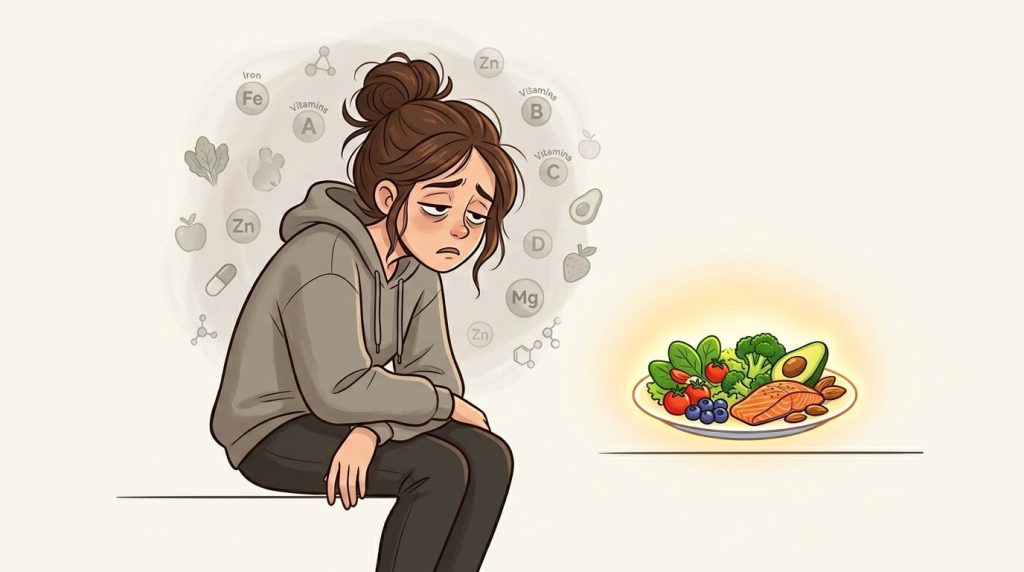
Another pattern that shows up in research is that being low in certain nutrients can impact both sleep and energy levels.
This includes:
- Iron
- Magnesium
- Potassium
- Zinc
- B vitamins
- Vitamins C, D, and E
These vitamins and minerals take part in all kinds of complex reactions in our body — iron, for example, helps with the production of serotonin, while B vitamins help to create melatonin.
But there’s no need to go out and supplement with these unless your doctor has specifically advised it.
Our philosophy is to go natural and follow a food-first approach, and it is definitely possible — and recommended — to get the nutrients we need just by eating a variety of different plant foods.
6. Simple Evening Snacks That Help You Relax and Sleep Better
If you like having something in the evening, you can actually choose options that support sleep.
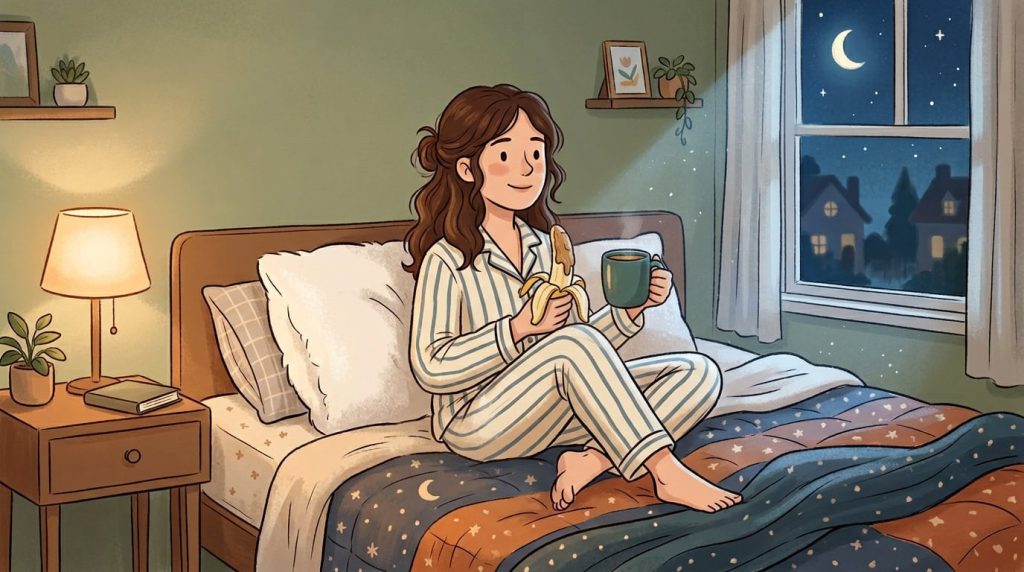
Banana and nut butter
Both bananas and almond butter contain tryptophan, and when you combine that with the quick-digesting carbs in the banana, the tryptophan absorption in our brain is increased.
What’s more, they’re both high in magnesium, and bananas are high in potassium — a couple of the minerals we just talked about.
Warm soy milk
In place of an evening tea that might have caffeine in it, you could try warm soy milk instead.
It contains tryptophan but also magnesium and calcium. And if you’d prefer something flavored, try a homemade golden latte — it makes for a really comforting drink that also helps to promote sleep.
7. Caffeine and Its Hidden Effects
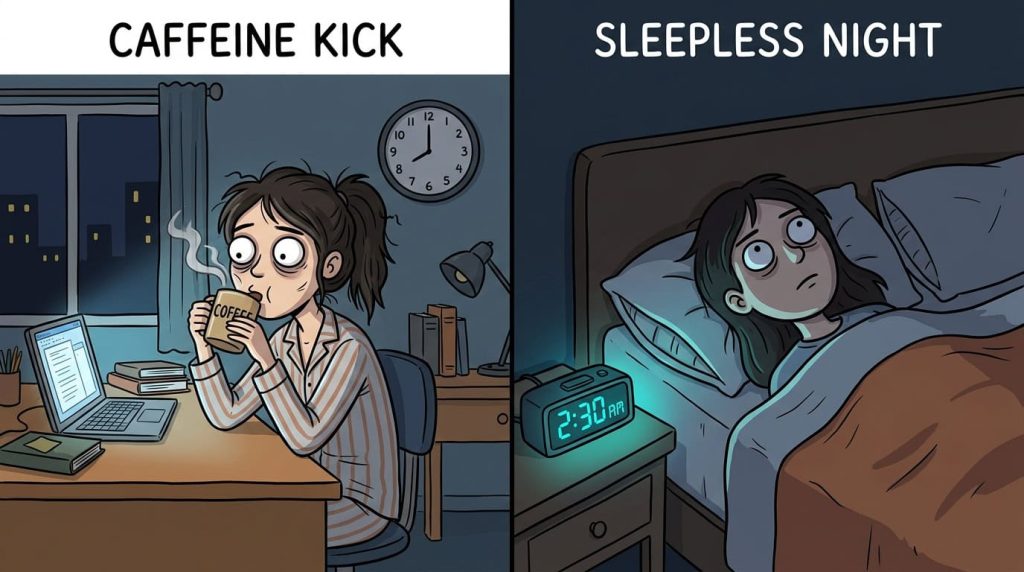
We all know that caffeine — found most predominantly in coffee, but also in energy drinks and tea — helps us feel more alert.
This is because it’s a stimulant that temporarily suppresses the buildup of sleep pressure, which is the mechanism that makes us tired.
Now everyone is different, but in most adults, it takes the body about 3 to 7 hours to break down half of the caffeine in our system — this is known as its half-life.
So let’s say we drink our first cup of coffee at 9am.
Five hours later at 2pm, there’s still going to be half of that caffeine in our system. Another five hours later at 7pm, a quarter of what we drank at 9am is still there. And by midnight, we’re going to have an eighth of that caffeine still in our system.
Pretty interesting, right?
Keeping caffeine’s half-life in mind, it helps to have our caffeine early in the morning or early afternoon, and try to limit it later in the evening if we want a better night’s rest.
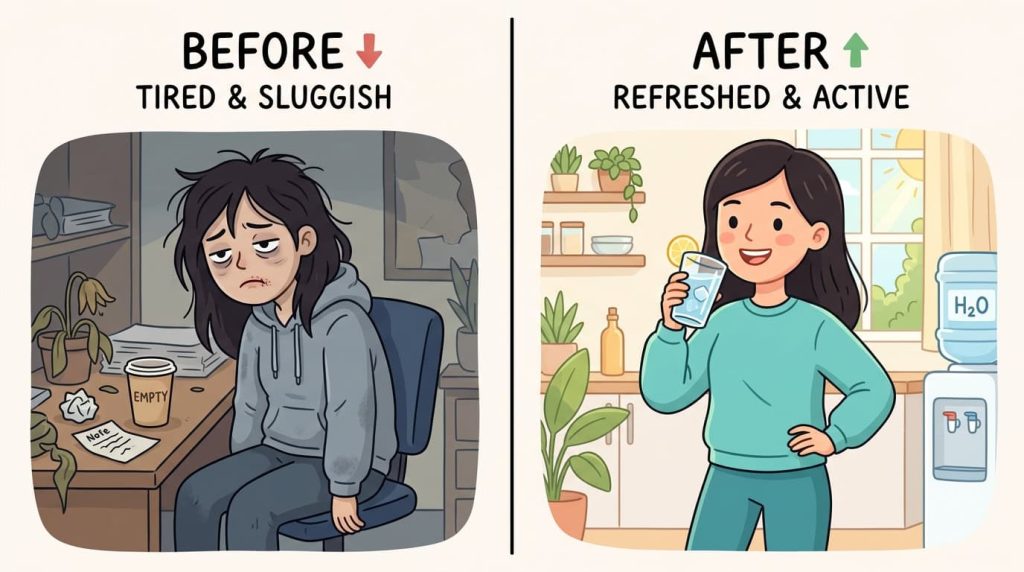
Not Drinking Enough Water Can Make You Feel Tired
Water makes up about 55 to 75 percent of our body weight and is involved in so many different reactions in the human body — but a lot of adults just don’t drink enough.
Even mild dehydration, according to the research, can cause things like fatigue and daytime sleepiness, mood changes, and a drop in cognitive performance.
So if you find that you’re tired a lot during the day, it might help to just check in and see if you think you’ve been drinking enough.
Some signs: your skin or lips might be dry, or your pee could be a bit dark in color — and if it is, that’s just a reminder to drink a little bit more!
Final Takeaway
There’s no single “magic food” that fixes everything.
But when you:
- Eat at consistent times
- Build balanced meals
- Stay hydrated
- Pay attention to caffeine
…you give your body what it actually needs to feel energized during the day and rested at night. And honestly, that’s where the real difference starts.
If you’re interested in simple lifestyle changes that support long-term health, you might also like these Japanese habits for a healthier and longer life.





Leave a Reply