

The key to getting rich isn’t about living life at the extreme, like waking up at 4:00 am to get ahead of the competition or taking a daily ice bath to wake up your senses.
It’s actually about forming micro habits.
These small habits compound over time and not only they improve your finances but also elevate your physical, mental, and emotional well-being.
So in this post I’m going to share 17 micro habits that can completely transform your finances and other areas of your life. Let’s dive in.
1. Create More Than You Consume
Wealthy people in the world create more than they consume.
Thomas Corley’s research found that:
- 67% of wealthy people watch TV for one hour or less each day
- 77% of people struggling financially watch TV for one hour or more each day
Instead of being glued to the box, think about how you can create something. When you create something, you develop your knowledge, your skills, your experience more than you ever will through consuming.
How to make it a habit:
- Start small, just 15 minutes a day doing something you enjoy
- This could be starting that YouTube channel you’ve been thinking about, writing short stories, or learning basic coding through fun apps
- Do a regular audit of your creation time vs. consumption time, it should always show you’re creating more than you’re consuming
2. Create Distance from the Wrong People
There’s a saying: you are the average of the five people you spend the most time with.
I can’t stress this enough, if you find yourself surrounded by people who are always talking about other people, putting someone down, or complaining, find a way to create distance from them.
As long as they’re around you, you’re going to absorb that thinking, and it’s going to be really hard to make any drastic changes to your life.
You can tell how successful someone is going to be by the kind of problems they face.
Find people whose problems are about:
- How to build more wealth
- How to solve a problem
- How to overcome a challenge they’re facing
If you’re just starting out and don’t have access to that kind of circle yet, your closest circle can become books, podcasts, and YouTube channels. The internet makes it so much easier to shift your average.

3. Practice Daily Gratitude
Gratitude might sound simple, even cliché, but it’s powerful.
Try keeping a gratitude journal. Maybe add a quick entry on your phone, write down the day’s highlights and what you’re grateful for. It could be something as simple as:
- Getting the perfect coffee
- A thoughtful message from a friend
- Making it to a workout
When you actively look for what’s going right in your life, your mindset shifts from scarcity to abundance. This directly impacts your decisions and emotional state.
How to start: Set a five-minute evening reminder and jot down just one thing from your day that you’re grateful for.
4. Create a Confidence Journal
Most people focus so much on what they haven’t achieved yet that they completely ignore how far they’ve already come. This creates self-doubt, even when real progress is happening.
Self-doubt is one of the biggest blockers to progress. Even confident people experience it.
By documenting your wins, no matter how small, you start building proof of your capability. It becomes your personal reminder that you can take action, overcome challenges, and follow through.
This is especially powerful during moments of fear or uncertainty. Instead of relying on motivation, you rely on evidence.
How to apply it:
Create a simple “wins, or I can do this journal” on your phone or notebook. Every time you:
- Complete something difficult
- Step outside your comfort zone
- Achieve a milestone
- Or overcome doubt
Write it down.
If your confidence has taken a hit lately, these strategies will help you rebuild it from the ground up.

5. Automate Saving and Investing
Warren Buffett famously quote: “Do not save what is left after spending, but spend what is left after saving.”
One of the biggest financial mistakes people make is saving whatever is left after spending. In reality, that “leftover” is usually nothing.
Every month, a fixed portion of my income automatically goes into my savings and investment accounts before I can spend a single penny.
Automation removes this problem completely.
How to apply it:
Set up a system where every month a fixed portion of your income automatically goes into your savings or investment account before you can spend a single penny. This builds wealth without relying on willpower.
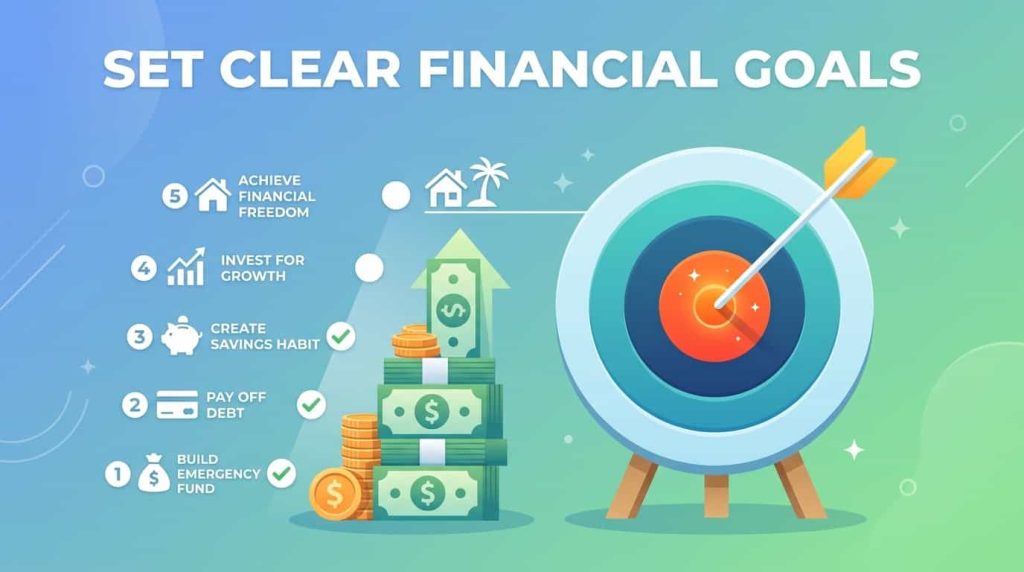
6. Get Specific With Your Financial Goals
Saying “I want to save money” is too vague. Your brain needs clarity to take action.
Write down one big financial goal every year, and be really specific about it.
Why? Because the more specific you are about your goals, the more likely you are to achieve them.
As well as keeping you motivated, being specific with your financial goals helps you break them down into smaller, more manageable milestones. In
7. Audit Your Spending Regularly
You can’t improve what you don’t track.
Make auditing your spending a cornerstone habit, quarterly and monthly for your business and personal accounts.
Most people don’t realize where their money actually goes, which leads to overspending without awareness.
How to apply it:
Divide your expenses into three categories: needs, wants, and future investments. Review them regularly to ensure your spending aligns with your goals.
What’s great about this approach is it’s not just about tracking, it’s about intentional living. It’s like having a financial compass that keeps you moving in the right direction.
8. Learn Something New About Money
You know that saying — knowledge is power? Financial education isn’t something you learn once; it’s ongoing.
Even small amounts of learning can significantly improve how you manage, save, and grow money.
How to apply it:
Block just one hour a week or 10 minutes of your day, maybe during your lunch break, maybe after dinner, to learn something new about money, investing, budgeting, or even money psychology. It’s not a huge commitment, but it makes a real difference.
There’s always something new to learn, and every little bit of financial knowledge adds up, whether it’s a new investment app, understanding how to negotiate better, or exploring a new income stream.

9. Stop Caring About Opinions
Everyone cares about the opinions of others to some extent, and it’s one of the most difficult habits to break free from. But when you do, you start venturing out more and taking bigger risks.
Fear of judgment stops many people from taking action, starting a business, investing, or even improving their life.
But most opinions don’t actually matter in the long run.
How to apply it:
Before holding yourself back, ask: “Will this person’s opinion matter in 5 years? How important is this person’s opinion?”
If the answer is “not very important,” become laser-focused on what you want to achieve based on your own values, not the opinions of others.
10. Avoid the Yes Trap
Every “yes” to the wrong thing is a “no” to what actually matters.
Learning to say no is a hard one. And according to research published in Psychology Today, most people struggle with it.
It’s a phenomenon psychologists call the yes trap — a deep-rooted feeling that we should always say yes to requests, invitations, and opportunities, even when our plates are already full.
The consequences of the yes trap:
- Burnout
- Resentment
- Neglecting self-care
- Missing opportunities that actually align with your goals far better
How to apply it:
Get crystal clear on your goals. Then filter opportunities based on whether they align with them. If they don’t, say no confidently.
Another thing you can do is delay your response. Study shows that if you delay your decisions just a few milliseconds, it can help you make better decisions.
If your ‘yes’ is burning you out, you need to see these guilt-free ways to say no.

11. Invest in Yourself
The best investment you can ever make isn’t in stocks, commodities, or even real estate, it’s in yourself.
The returns on self-investment compound in the same way that financial investments do. Their benefits add up over time. So whether you’re pursuing education, improving your fitness, or practicing self-care, putting yourself first is always a sound investment.
12. Build Multiple Income Streams
Most millionaires you meet will have multiple income streams, and it really is a cornerstone of building wealth. If one income source takes a hit, others can make up for that shortfall and keep your cash flow healthy.
Multiple income streams provide security and accelerate wealth-building.
How to get started: Take stock of your skills, your experience, and your interests, and think about how you can potentially monetize them.
Start with one additional stream, freelancing, online work, or small investments. Focus on making it stable before adding more.

13. Simplify Decision Making
Too many decisions drain your mental energy, leaving less for important tasks. That’s why many successful people simplify repetitive choices.
Steve Jobs wore his iconic black turtleneck, blue jeans, and New Balance trainers every single day. Mark Zuckerberg does something similar with his gray t-shirts.
They both had the same idea, wearing the same outfit each day to reduce decision fatigue and save their mental energy for more pressing matters.
You can apply this to your own life by keeping a select few outfits for working hours, or by automating other repetitive daily choices.
Create routines for things like meals, clothes, or work schedules. This frees up energy for bigger decisions.
Less friction in the small stuff means more energy for the things that actually move the needle, and it can save you a fair amount of money too.
14. Network with Intent
Opportunities often come through people, not just skills.
But networking isn’t about taking, it’s about building genuine relationships.
Here’s the key thing: it’s not just about what you can get, it’s about what you can give.
Before reaching out to someone, think about how you can add value to them first. By being intentional and leading with value, you build relationships that lead to incredible opportunities — both ways — either immediately or somewhere down the road.

15. Take Action Before You Feel Ready
There’s no perfect time to start something new. You’ll never feel completely ready, and tomorrow never comes.
So whenever a good idea comes to mind, try not to procrastinate. Take a leap of faith and get the first step underway. You may hit some home runs, but you’ll also very likely make some blunders too, which you learn from along the way. And that’s okay. It’s all part of the learning process.
So whenever a good idea comes to your mind, try not to procrastinate, take a leap of faith and get the first step underway.
And if procrastination is something you’re struggling with right now, this post about overcoming procrastination is for you.
You may hit some home runs, but you’ll also very likely make some blunders too, which you’ll learn from along the way. And that’s okay. It’s all part of the learning process.
Trust your gut and just take that first step, even if you don’t feel ready for it.
How to apply it: You can kick it off casually. Ask others how they budget, save, or invest. You’ll gain insights you won’t find elsewhere.
16. The 1% Progress Rule
This rule is about making small, consistent improvements to your financial situation each month.
This could mean:
- Increasing your savings rate
- Trimming one expense
- Finding a creative way to boost your income
Here’s the thing: even a tiny 1% improvement every month adds up to meaningful results over time. Just by doing this, you’re setting yourself up for long-term financial success without feeling overwhelmed.
Stay consistent and watch those small changes lead to big progress. Give it a try and see the difference it makes.
Final Thoughts
You don’t need extreme discipline or dramatic lifestyle changes to succeed.
You need small habits done consistently.
Because in the end, success isn’t built in a day, it’s built daily.
Before you leave, make sure to read about behaviors that hinder your chances of success. It could help you eliminate the mindset blocks stopping your progress.