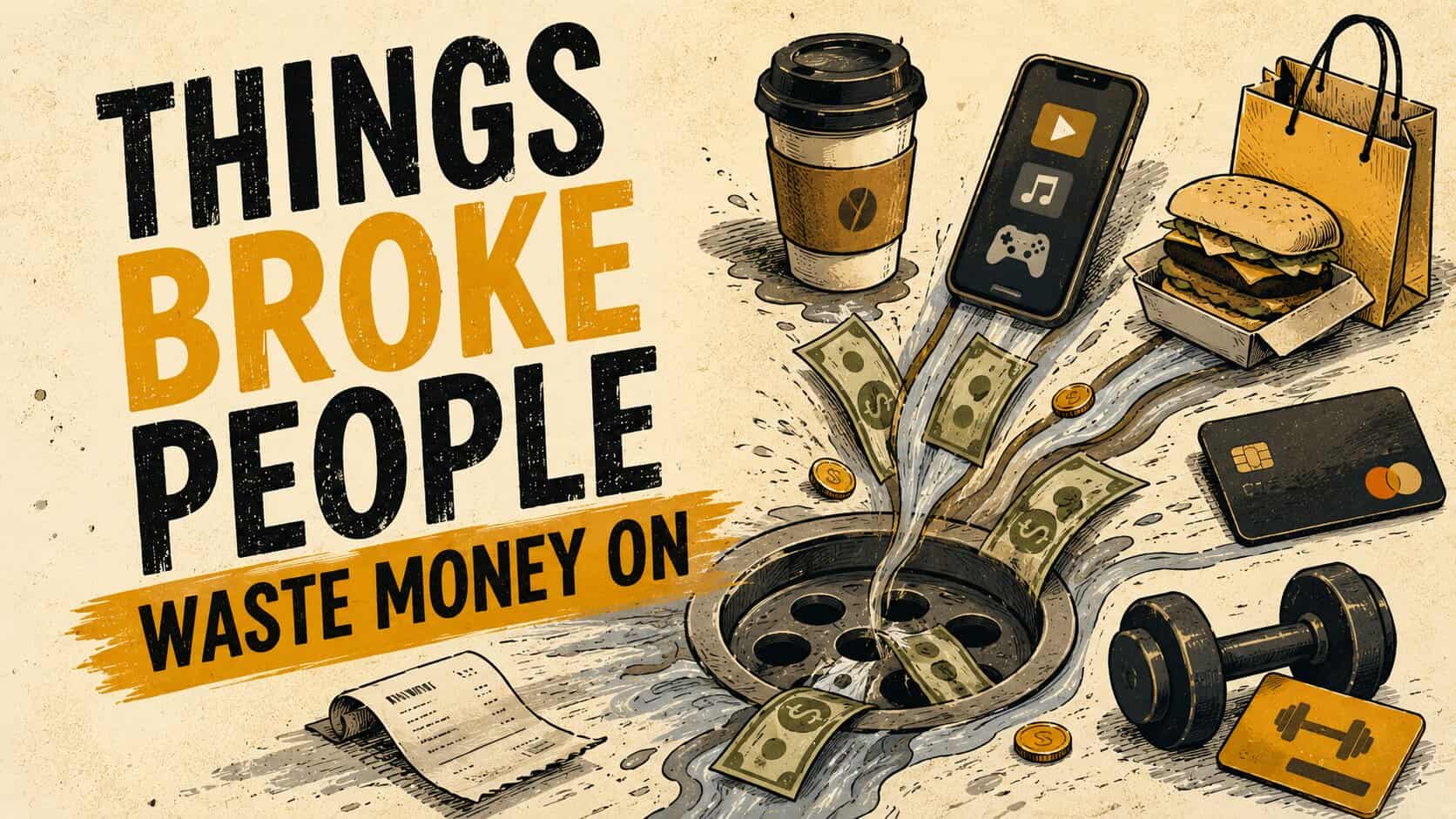
Most “stop wasting money” lists read like a scolding. You lack discipline, you need self-control, feel bad about that latte. Let’s skip that part.
Some of this money isn’t lost to bad decisions. It’s lost to systems built to take it before you notice. Once you separate the two, you know what to actually fix first.
The Frictionless Leaks
Money that disappears because you forgot it was leaving.
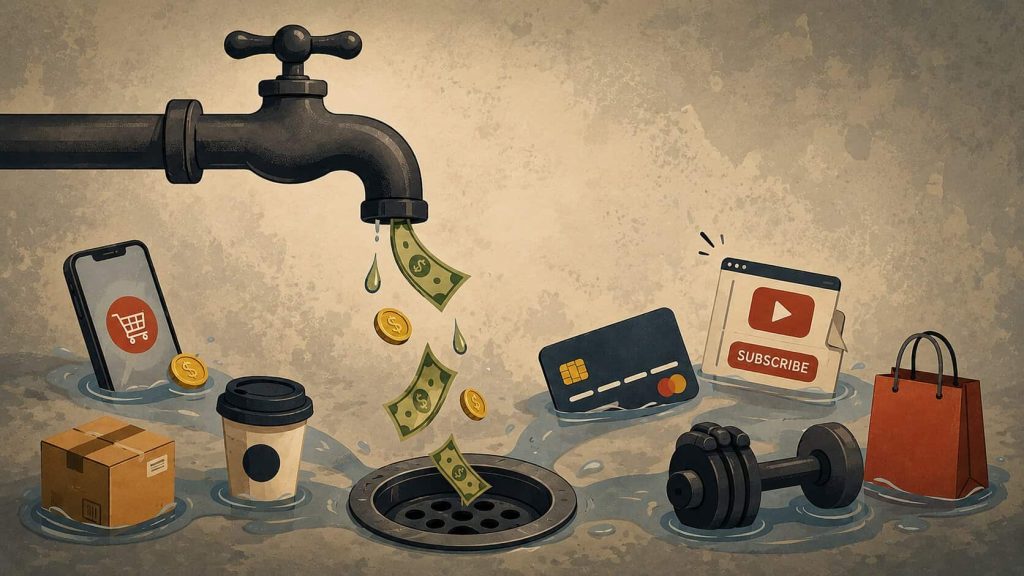
1. Impulse Purchases
That pack of gum or seasonal candy at checkout never feels like a real purchase. It’s a few dollars, it’s right there, and you’re already holding your wallet. Add it up over a year, though, and the average person loses close to $2,000 this way, a few bucks here and a few there.
The trick isn’t stopping every impulse buy cold. It’s noticing the pattern. If you’re consistently walking out with things you didn’t come in for, that’s not bad luck, that’s a habit with a name.
2. In-App and In-Game Purchases
Nobody sits down planning to spend $75 on digital extras. It happens $5 at a time, a skin here, some bonus coins there, until the total would’ve bought you an actual physical thing you could hold. These purchases are priced small on purpose so the running total never quite registers.
3. The Forgot-to-Cancel Subscriptions
The average person is juggling around 12 subscriptions, adding up to roughly $219 a month. Streaming, a fitness app, that meditation trial from a stressful week in March you never opened again.
Signing up takes one click. Cancelling somehow takes a buried menu and a guilt-trip survey. That gap isn’t an accident.
Try naming every subscription you’re paying for right now, no peeking at your bank statement. If you can’t, that’s not a memory problem. That’s money still leaving with your name on it.
4. Cable TV (Paying for Channels You Don’t Watch)
Paying $100 or more for hundreds of channels to watch three or four of them is its own special kind of waste, especially when you’re still sitting through ads on a service you already pay for.
Cable stayed the default option for years, so a lot of people never stopped to ask if it still matched how they actually watch TV. The channels changed. Viewing habits changed. The bill stayed the same.
It’s worth checking whether you’re paying for a habit you still have, or one you gave up years ago. A couple of streaming subscriptions or a basic digital antenna usually covers everything you actually watch, for a fraction of the cost.
5. The January-Only Gym Membership
A premium gym membership you visit twice a year isn’t a fitness expense, it’s a guilt subscription with a monthly invoice.
Walking and jogging outside are still free, and a $10 no-frills gym gets you the same equipment without the smoothie bar you were never going to use anyway.
The fix: none of this needs willpower. It needs one hour, once a year, going through your bank statement and cancelling anything you can’t remember signing up for.
The Status Tax
Money spent so people think something about you that isn’t quite true.

6. Financing Brand-New Cars
A new car is a bad financial bet the second you drive it off the lot. Not eventually, immediately. It’s worth less than what you paid before you’ve even set up the Bluetooth.
Finance it over five or six years and you’re paying interest the whole time on something that’s losing value under you. People do it anyway because a new car feels like proof you’ve made it. Fine, I get it. But the math doesn’t care how it feels, and a car payment that eats a fifth of your paycheck isn’t a status symbol, it’s a slow leak with cup holders.
Going for the cheapest option isn’t the answer either. An unreliable car has its own price tag, one that doesn’t show up on the sticker: tow trucks, missed shifts, the specific dread of turning a key and hearing nothing on a morning you can’t afford to be late.
The real answer is somewhere in the middle: buy used, buy something known for holding up, and pay cash if you can. It won’t turn heads in a parking lot, and its the difference between a car that serves you and one that quietly runs your paycheck for the next five years.
7. Car Leasing (Renting Depreciation)
Leasing gets marketed as the smart way to always have a newer car, but really it’s just renting depreciation with extra steps.
Lower monthly payments feel like a win until the lease ends and you’re standing there with nothing, plus a bill for mileage you didn’t know you were tracking.
The real difference isn’t the car, it’s the question. One version of buying asks how much down, how much a month. The other rich one just asks the total price, and decides from there whether it’s actually worth it.
Here are a few habits of the wealthy that you can easily adopt in your own life.
8. Designer Clothing
A logo doesn’t change how well something’s made, it just changes the price. Spending three or four times more for the same basic function might feel good walking out of the store, but that feeling doesn’t last. Your savings account will.
9. Designer Baby Clothes
Babies have no idea what a brand is, and within a week whatever they’re wearing is going to be covered in something no amount of designer fabric prevents. Save that extra money for something the kid will actually benefit from later, like a real college fund instead of a onesie with a logo on it.
The Math Built Against You
Costs that exist because comparing options takes more effort than most people give it.

10. Credit Card Interest Trap
This is one of the quietest ways people lose money without ever noticing it happening. Carrying a balance means paying for something you already bought, again and again, every month it sits there.
You bought something in March, and here in July, you’re still paying for it. At 22% APR, a $30 purchase left unpaid can quietly grow past $40 over the course of a year, not because you spent more, but because you waited.
The simplest fix is just paying the statement in full every time, no exceptions. If that’s not possible right now, put extra money toward the highest-interest balance first, and ignore whatever advice tells you to pay off the smallest one “for motivation.” Motivation doesn’t compound. Interest does.
Just try to avoid interest; otherwise, you will get caught in the ‘interest trap’ that the company has already laid out for you.
11. Extended Warranties
Warranties are profitable because the company selling one already knows how rarely that specific product breaks within the covered window. You’re not really buying protection, you’re placing a bet, and the company already knows the odds are in their favor.
An emergency fund covers this same risk, and every other risk, for free.
12. Banking and Overdraft Fees
Overdraft charges and minimum balance penalties exist because switching banks takes an afternoon most people never get around to. A $35 fee on a $10 shortfall is close to a 350% penalty, a steep price for the crime of having slightly less money than the bank wanted you to have.
13. Overpriced Phone Plans
The average phone plan runs around $141 a month, and a large chunk of that is just brand loyalty nobody’s actually benefiting from.
Budget carriers often run on the exact same networks for a fraction of the price. And if you’re financing the phone itself on top of the plan, that’s debt wearing a phone case, pay it off and stop carrying a monthly bill for a device you’ll replace in two years anyway.
14. Crappy Insurance
Being underinsured and overpaying are two different problems, but they usually come from the same cause: nobody wants to spend an afternoon comparing quotes. An independent broker can do that legwork for you, and the fix usually pays for itself the first year.
The Desperation Systems
Built to take the most from people with the least room to lose it.
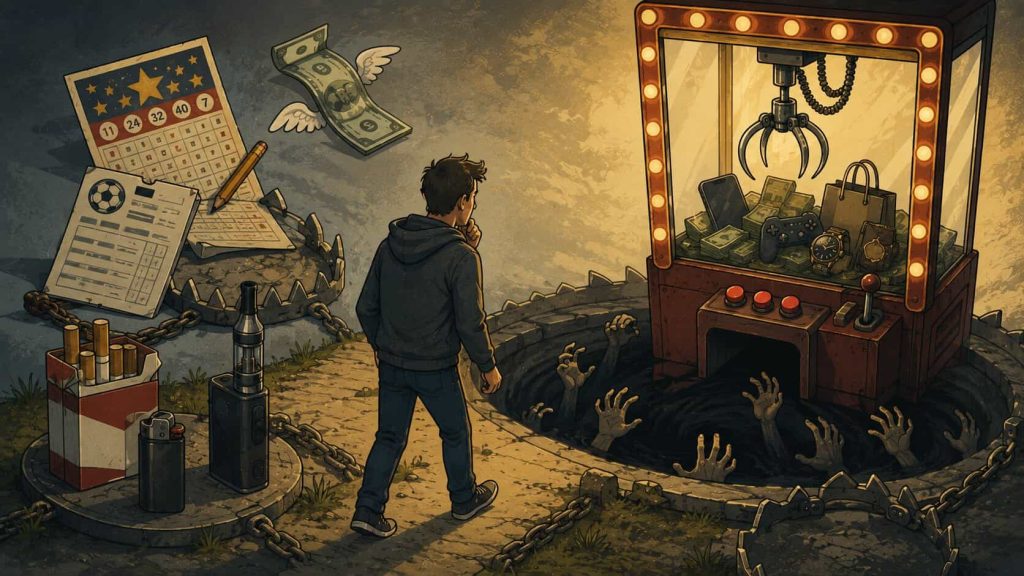
15. Lottery Tickets
The odds of winning are so remote that calling it “a chance” is generous marketing. That same $80 a month, invested instead and left alone for 40 years of compounding, could turn into something close to $700,000.
Lower-income households spend a bigger share of what they have on tickets, which makes this less a game and more a quiet tax on hope.
16. Sports Betting
It’s hard to make it through a single game broadcast now without an ad for some sports betting app promising easy money.
The odds here work against you for the same reason lottery odds do, someone has already run the numbers, and they don’t favor the person placing the bet.
Occasional wins don’t disprove that, they just keep people at the table long enough to give it back.
17. Vices (Smoking and Vaping)
A pack-a-day smoking habit runs close to $3,000 a year. Regular vaping can top $1,000. These cost you twice, once in money and once in the years you don’t get back, and the money alone is reason enough to make the math not work.
Plan Ahead or Pay More
Money lost to timing, not temptation.
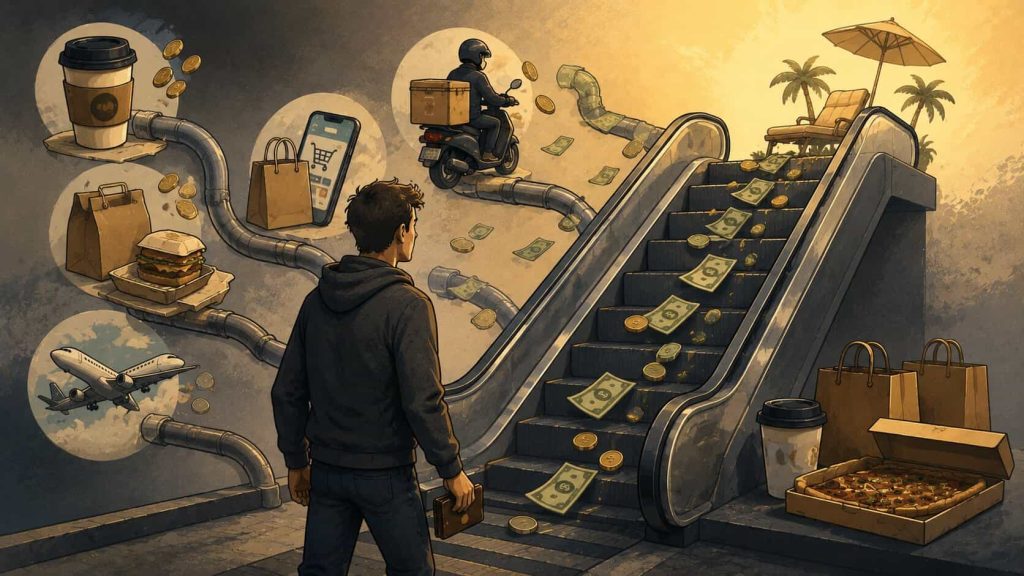
18. Eating Out
Cooking every night isn’t realistic for most people, and it’s easier to fire up a delivery app after a long day.
But that convenience carries a real cost, the average American drops around $3,600 a year eating out. It’s less about never ordering in again and more about noticing when convenience has quietly become the default instead of the exception.
19. Expensive Dates
A $25 cocktail or stale $10 movie popcorn doesn’t automatically make an evening better than one with actual thought put into it.
Fancy isn’t the same as memorable. A picnic in the park or a homemade dinner with candles works just as well, sometimes better, and costs a fraction of the price.
20. Little Treats
A latte or a pint of ice cream isn’t the problem, occasional rewards are part of a normal, healthy relationship with money. The problem is when “occasional” quietly turns into “automatic,” and you stop noticing it’s happening at all.
21. Peak Prices for Flights and Hotels
Booking last-minute during peak season almost always means paying double for the exact same seat someone else got by planning a few months ahead. This is one of the easier fixes on this entire list: it doesn’t ask you to change a habit, just to book earlier.
Here’s a breakdown of some more bad spending habits you might want to look out for.
Final Thoughts
None of this means never enjoying anything. It means noticing which of these are decisions you’re actually making, and which ones are systems, or a lack of planning, quietly making the decision for you.
Keep the spending that genuinely improves your life. Question the spending that’s running on autopilot.
Because most financial progress doesn’t happen through one life-changing decision. It happens when enough small decisions finally start working in the same direction.
You might also want to look into these micro-habits that can help improve your financial situation.