You’re probably tired of seeing your hair in the shower drain, or maybe you’ve noticed your ponytail getting thinner, or your part is just… wider than it used to be. It sucks.
Here’s the thing though, before you drop hundreds of dollars on supplements or fancy hair treatments, you might want to check what’s actually going into your body. Because your hair is basically a report card for what you’ve been eating for the past few months.
Healthy hair doesn’t start with products; it starts inside your body. What you eat directly affects inflammation, hormones, digestion, and nutrient absorption, all of which play a major role in hair growth.
Why Your Hair Cares About What You Eat
Quick biology lesson (I promise to keep it painless): Your hair follicles are basically little factories that are working 24/7. They need a constant supply of nutrients to do their job. When you’re not giving your body what it needs, your hair is usually one of the first things to suffer. It’s like your body’s way of saying “Hey, we’ve got bigger problems to deal with right now.”
Plus, inflammation is a huge deal. When your body’s inflamed, whether from stress, poor diet, or gut issues, it messes with everything, including your hair growth. That’s why a lot of these foods work on multiple levels: they’re feeding your hair follicles AND calming down inflammation AND helping your gut absorb nutrients better.
It’s all connected, even if it doesn’t seem like it at first.
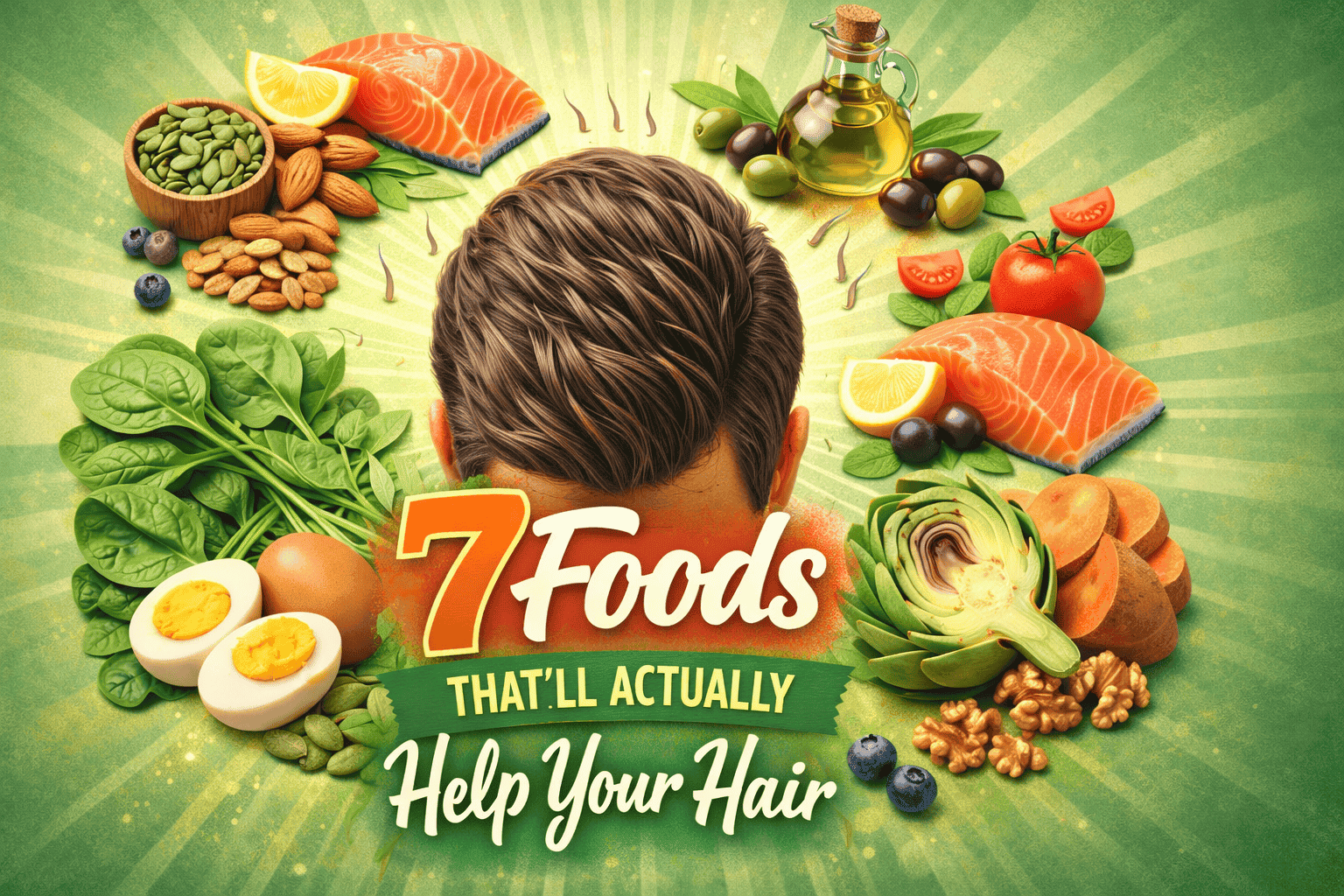
So let’s talk about seven foods that actually make a difference. Not because they’re trendy or because some influencer said so, but because there’s real science backing them up.
Table of Contents
1. Pumpkin Seeds
I know, I know. Pumpkin seeds aren’t exactly exciting. But hear me out.
These little seeds are basically kryptonite for DHT, that’s the hormone that shrinks hair follicles and causes pattern baldness. If you’re genetically prone to hair loss, DHT is probably not your friend. Pumpkin seeds help block your body from making too much of it.
They’re also packed with zinc (which a ton of people are deficient in), and they also have anti-inflammatory compounds that help keep your scalp healthy. And the fiber in them feeds the good bacteria in your gut, which helps you actually absorb all the other good stuff you’re eating.
How to eat them: Just keep a bag at your desk or in your car. Toast them with some spices if you want to get fancy. Throw a handful on your salad. Mix them into yogurt. They’re pretty versatile, and you only need about a quarter cup a day.
2. Wild-Caught Salmon
Okay, so salmon is one of those foods everyone tells you to eat, but there’s actually a good reason for it, especially for your hair.
First, the omega-3s. These fatty acids are like premium oil for your scalp. They reduce inflammation, keep your scalp from getting dry and flaky, and they actually help your hair grow thicker. Your body can’t make omega-3s on its own, so you have to get them from food.
Second, salmon is loaded with protein, and your hair is literally made of protein. If you’re not eating enough protein, your hair gets weak and starts falling out.
And then there’s all the B vitamins, vitamin E, and vitamin A. If you eat salmon regularly, you’re giving your hair real building material.
How to eat it: Aim for two to three times a week. Grill it, bake it, throw it in a salad, make salmon burgers, whatever works for you. Just try to get wild-caught when you can. It’s got more omega-3s and fewer contaminants than the farm-raised stuff.
Pro tip: Frozen wild salmon is usually cheaper than fresh and just as nutritious.
3. Artichokes
Artichokes help hair growth in a less obvious way, but an important one.
Artichokes are incredible for your gut, and your gut health directly affects your hair. They’re prebiotics, which means they feed the good bacteria in your digestive system. Better gut health means you’re actually absorbing the nutrients from all this good food you’re eating.
They also help with liver function, and in traditional medicine, liver function is closely tied to hair quality. Your liver processes hormones and gets rid of toxins, both of which matter for hair growth.
Plus, studies show they can lower blood pressure, which means better blood flow to your scalp. More blood flow equals more nutrients getting to your hair follicles.
How to eat them: Fresh artichokes are great if you know how to cook them (just steam them and dip the leaves in olive oil, it’s easier than it sounds). But honestly? Those jarred artichoke hearts work fine. Throw them on pizza, in pasta, on salads, whatever. Just get them in your diet a few times a week.
4. Olive Oil
This one’s easy because chances are, you’ve already got olive oil in your kitchen.
The thing about olive oil is that it’s been studied forever, and the research just keeps confirming that olive is ridiculously good for you. Studies suggest diets rich in olive oil are linked to healthier hair and skin, making it a simple yet powerful addition to your diet.
Olive oil contains oleic acid and polyphenols, which lower chronic inflammation and oxidative stress, both known to damage hair follicles.
The oleic acid in olives reduces C-reactive protein, which is basically a marker that shows how inflamed your body is. Less inflammation means a better environment for hair growth.
How to use it: Use it for everything. Salad dressings, cooking, drizzled on vegetables. Two to three tablespoons a day is ideal. Just make sure you’re buying extra virgin, that’s the stuff that still has all the beneficial compounds. And keep it in a dark bottle in a cool place so it doesn’t go rancid.
5. Walnuts
Walnuts are actually really good for your brain AND your hair.
Walnuts are rich in omega-3s, biotin, and vitamin E, which help fight inflammation and support scalp circulation. They’ve got a type of omega-3 called ALA that’s different from what you get in salmon. Studies show that vitamin E and omega-3s protect hair follicles from oxidative stress and can improve hair density over time.
They’re also good for your gut bacteria, they help the good guys grow while getting rid of some of the bad ones.
And here’s something cool: walnuts have natural anti-parasitic and anti-fungal properties. Basically, they help clean up your gut so you can absorb nutrients better.
How to eat them: A small handful a day (about seven whole walnuts) is plenty. Chop them up in oatmeal, add them to salads, blend them in smoothies. You can even make walnut butter if you’re feeling ambitious.
Just don’t go crazy, they’re calorie-dense. A handful is good. A whole bag? Not so much.
6. Spinach
Okay, so you’ve heard you should eat your greens since you were five years old. Your mom was right.
Spinach is packed with iron, and iron deficiency is one of the most common reasons people lose hair, especially women. Your hair follicles need oxygen to function, and iron helps carry that oxygen through your blood. No iron? No oxygen. No oxygen? Weak, falling-out hair.
It’s also loaded with folate (that’s vitamin B9), which helps with cell division. Plus there’s vitamin A for sebum production (that’s the natural oil that keeps your scalp moisturized), and vitamin C to help you absorb all that iron.
How to eat it: Fresh spinach in salads, sautéed with garlic and olive oil, thrown into smoothies (you seriously can’t taste it), mixed into eggs, pasta sauce, soups, honestly, spinach goes in everything.
Pro tip: Eat it with something that has vitamin C, like tomatoes or lemon juice. It helps your body absorb the iron better.
7. Eggs
Eggs are simple, affordable, and incredibly effective for hair growth.
They’re packed with protein and biotin, both essential for strong, thick hair. If you’re not eating enough protein, hair growth usually slows down; there’s no way around it. Research highlights that adequate protein intake improves hair strength and reduces breakage over time.
Eggs also contain iron and B vitamins that help deliver oxygen and nutrients to hair follicles.
How to eat them: Boil, scramble, or make omelets; add to salads or grain bowls; or use in baking for protein-rich treats.
Putting It All Together
I’m not going to lie to you and say you need to eat all seven of these foods every single day. That’s not realistic, and honestly, it’s not necessary.
Here’s what a realistic week might look like:
- Have salmon two or three times
- Add spinach to at least one meal a day (it’s easy, I promise)
- Snack on pumpkin seeds and walnuts a few times
- Use olive oil as your main cooking oil
- Have eggs for breakfast or other meals a few times
- Work artichokes in when you can (they’re more flexible)
Here’s an example of a simple day using these foods:
Breakfast: Scrambled eggs with spinach, cooked in olive oil. Side of roasted sweet potato.
Snack: Small handful of walnuts and an apple.
Lunch: Big salad with spinach, artichoke hearts, cherry tomatoes, grilled salmon on top, olive oil dressing.
Snack: Pumpkin seeds and some berries.
Dinner: Sweet potato and quinoa bowl with more sautéed spinach and whatever protein you want.
See? It’s not complicated. The goal is making these foods part of your routine so your hair, body, and overall health can thrive.
Quick Takeaway
Healthy hair isn’t about one “magic” food. It’s about consistently nourishing your body.
These seven foods: pumpkin seeds, salmon, artichokes, olive oil, walnuts, spinach, and eggs — aren’t magic. But they’re giving your body what it actually needs to grow healthy hair: protein, healthy fats, vitamins, minerals, and anti-inflammatory compounds.
Start small: swap out snacks, add a few servings of greens, or cook with olive oil. Over time, your hair will show the results — because real, lasting growth comes from creating a healthy environment from the inside out.
Quick disclaimer: If you’re losing a ton of hair suddenly, or if nothing seems to help, see a doctor. Sometimes there’s a medical issue that needs to be addressed. This isn’t medical advice, it’s just information about foods that support hair health.