
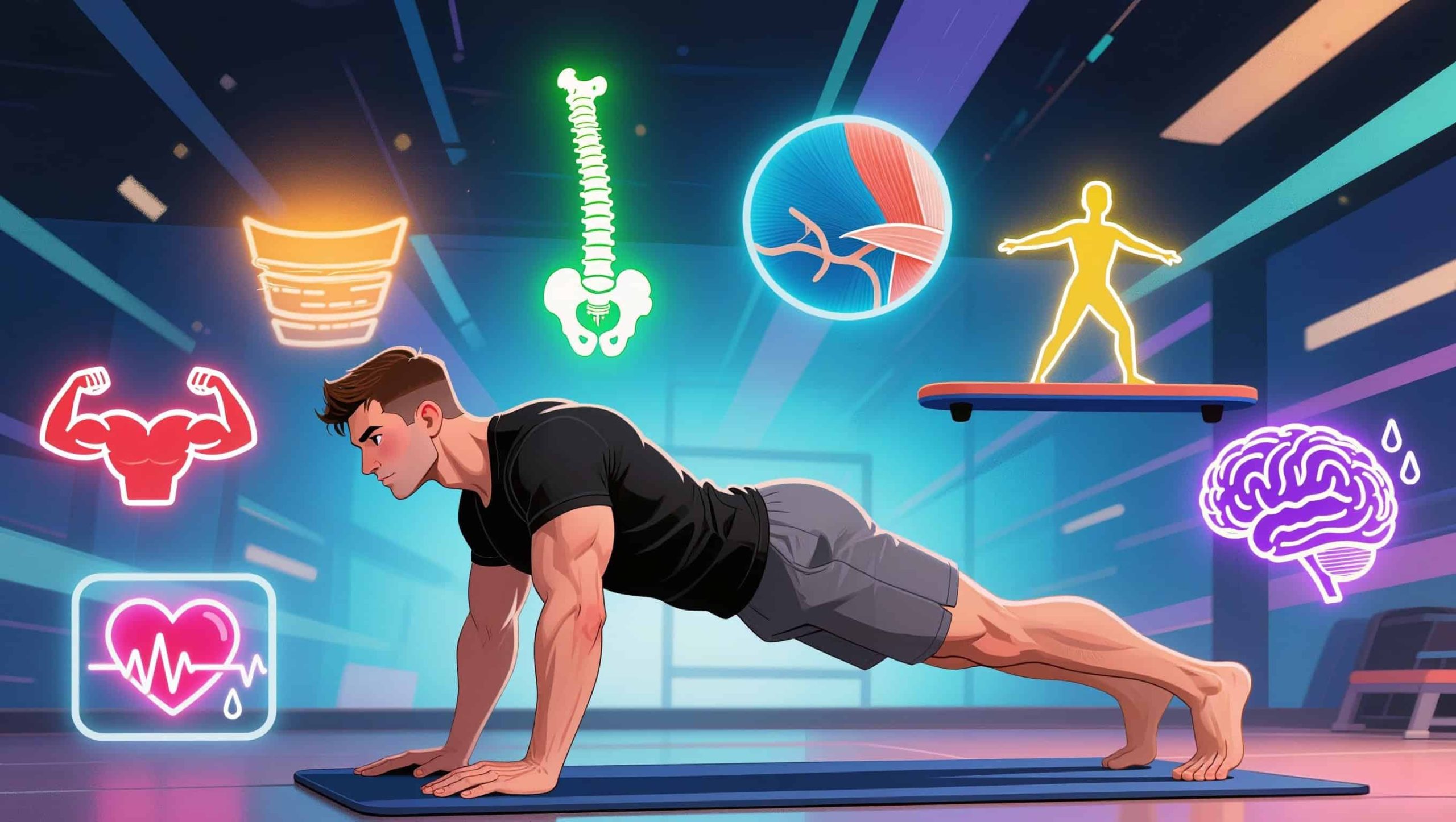
You know that moment when you think you’ve got something all figured out, and then reality slaps you right in the face? Yeah, that was me with the plank exercise.
Someone was showing me this exercise, and I’m standing there watching them hold this position, thinking to myself, “Seriously? That’s it? That’s so easy. That’s not really a workout. That’s not going to do anything.” I probably had the most skeptical look on my face.
Then I actually got down and tried it myself.
Holy. Cow.
I was absolutely shocked by how difficult it was right from the start. My arms were shaking, my core was screaming, and I’m pretty sure I lasted about 15 seconds before I had to give up. Talk about eating humble pie! But once I got over my bruised ego, I started learning about the genuinely impressive benefits of this deceptively simple exercise, and now I’m a total convert.
Table of Contents
What Exactly Is a Plank?
The plank is what’s called an isometric exercise, which means your muscles are working without moving. Instead of lifting and lowering weight, you’re holding your body in a fixed position and forcing multiple muscle groups to stay engaged at the same time.
That constant tension is what makes planks so powerful.
There are two main versions you can start with:
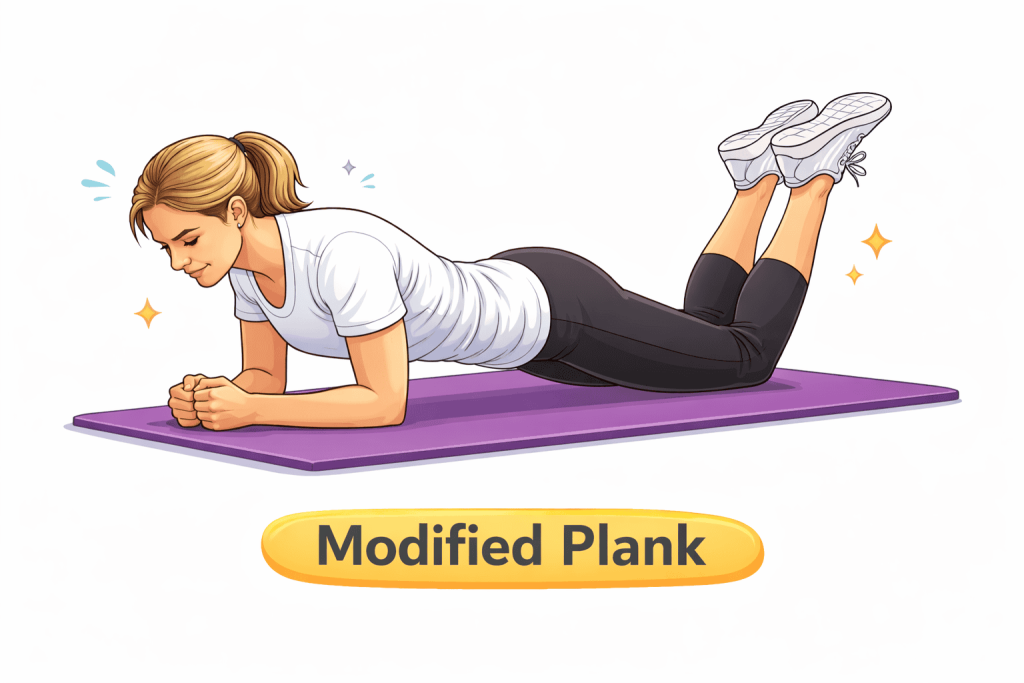
The Modified Plank (Perfect for Beginners)
This is where I’d recommend most people start, especially if you’re new to core work. Here’s what you do:
- Get down on your knees and rest on your forearms
- Keep your entire spine straight and neutral. Imagine a straight line running from the top of your head all the way down to your tailbone
- Pull your shoulders back and down (don’t let them creep up toward your ears)
- This is important: don’t let your hips sag or pike up. Keep everything in that nice, straight line
The Standard Front Plank
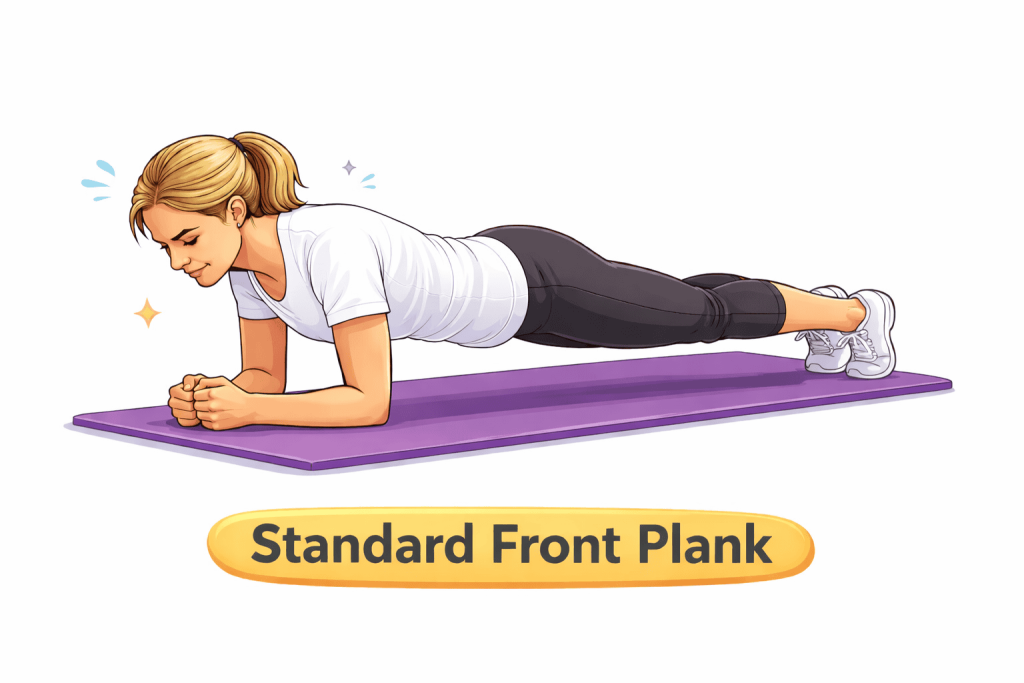
This is the version most people picture when they hear “plank.” So once you’ve mastered the modified version:
- Get into push-up position, but drop down onto your forearms instead of your hands
- Your body should form a straight line from your head to your heels
- Maintain that position while keeping everything engaged
- Once you’ve got this down, there are tons of advanced variations you can explore to keep challenging yourself
How Long Should You Hold a Plank?
Here’s what I recommend: start with one to six reps per set, and hold each plank for at least 10 seconds. I know, 10 seconds doesn’t sound like much, but remember how I said I could barely last 15 seconds my first time? Yeah, start small and work your way up to 60 seconds.
Your ultimate goal is to work up to holding the position for a full minute. And between each rep, give yourself a rest anywhere from 30 to 90 seconds. Your body needs that recovery time, especially when you’re just starting out.
I cannot stress this enough: it looks ridiculously easy when you’re watching someone else do it, but it’s incredibly challenging when you’re the one holding the position. You’ll definitely feel it the next day.
What Planks Do If You’re Consistent
1. They Build a Strong Core (Not Just Six-Pack Abs)
Let’s talk about what “core” actually means, because a lot of people think it’s just about getting visible abs. Your core is so much more than that; it’s basically the powerhouse that connects your upper body to your lower body.
We’re talking about your abdominal muscles, yes, but also your back muscles, your obliques (those side muscles), your hip muscles, and even your glutes. It’s this entire muscular system that works together to stabilize your body and transfer force between your upper and lower halves.
2. They Improve Your Posture
If you’re like most people, you probably spend way too much time hunched over a computer or looking down at your phone. I’m guilty of this too! Planks help counteract all that forward slouching by strengthening the relationship between your chest, mid-back, shoulders, and neck.
They help keep your head properly aligned over your spine instead of jutting forward in that “tech neck” position we’re all familiar with. Better posture means less neck pain, fewer headaches, and honestly, you just look more confident when you’re standing tall.
3. They Create Balance Between Your Front and Back
Here’s something interesting that I didn’t know before: having asymmetrical strength between the front and back of your body can actually cause problems. If your abs are super strong but your back muscles are weak (or vice versa), you’re setting yourself up for issues.
Planks help develop that crucial symmetry between the front and back of your body. This balance is absolutely essential because when you’re asymmetrical, it can lead to joint pain and other issues, especially in your lower back.
4. They Strengthen Your Connective Tissue
When you hold a plank position for an extended period, you’re not just working your muscles — you’re also strengthening your tendons and ligaments.
These are the connective tissues that often get overlooked in fitness conversations, but they’re absolutely crucial. These are the things that literally hold our body together. Strong tendons and ligaments mean more stable joints and less risk of injury.
5. They Increase Stability and Coordination
A stable core means a stable back, and a stable back means you can actually do things without being in pain all the time. Think about it, your core is involved in almost every movement you make throughout the day.
Planks can reduce lower back instability, which is one of the most common sources of chronic pain. They improve your coordination while walking (yes, your core is working even when you’re just strolling down the street!), and they can significantly decrease lower back pain over time. If you’ve been dealing with a nagging lower back issue, planks might be exactly what you need.
6. They Actually Give You a Real Workout
Don’t let the simplicity fool you for a second. You will sweat. You will feel the burn. And you will definitely, absolutely, 100% feel sore the next day. I learned this the hard way!
What’s great is that planks complement other exercises really well. They’re not meant to be your entire workout routine (though on a busy day, you could definitely do worse), but they’re a perfect addition to any fitness regimen. Whether you’re into running, weightlifting, squats, push-ups, yoga or just trying to stay active, planks will enhance what you’re already doing.
7. They Help Reduce Stress
Like pretty much all exercise, planks can help reduce stress and improve your overall mental well-being. There’s something kind of meditative about holding a plank — you have to focus on your breathing, think about what your body is doing, and stay completely present.
Plus, there’s that amazing feeling of accomplishment when you beat your previous time or finally hit that full minute.
Final Thoughts
Planks are one of those exercises that don’t get enough credit until you try them. They’re simple, effective, and accessible to almost anyone, no matter your fitness level.
So here’s my challenge to you: give planks an honest shot. Start with the modified version if you need to (no shame in that game, we all start somewhere). Focus on maintaining proper form rather than just trying to last as long as possible. And gradually, consistently, work on increasing your hold time.
Your core will get stronger. Your posture will improve. Your back pain might decrease. And you’ll have this awesome sense of accomplishment every time you add a few more seconds to your plank time.
Start small, be patient with yourself, and don’t make the same mistake I did by underestimating this incredible exercise. Trust me, your body will thank you for it!
You might be interested in high-protein foods for getting a lean body.




Leave a Reply