
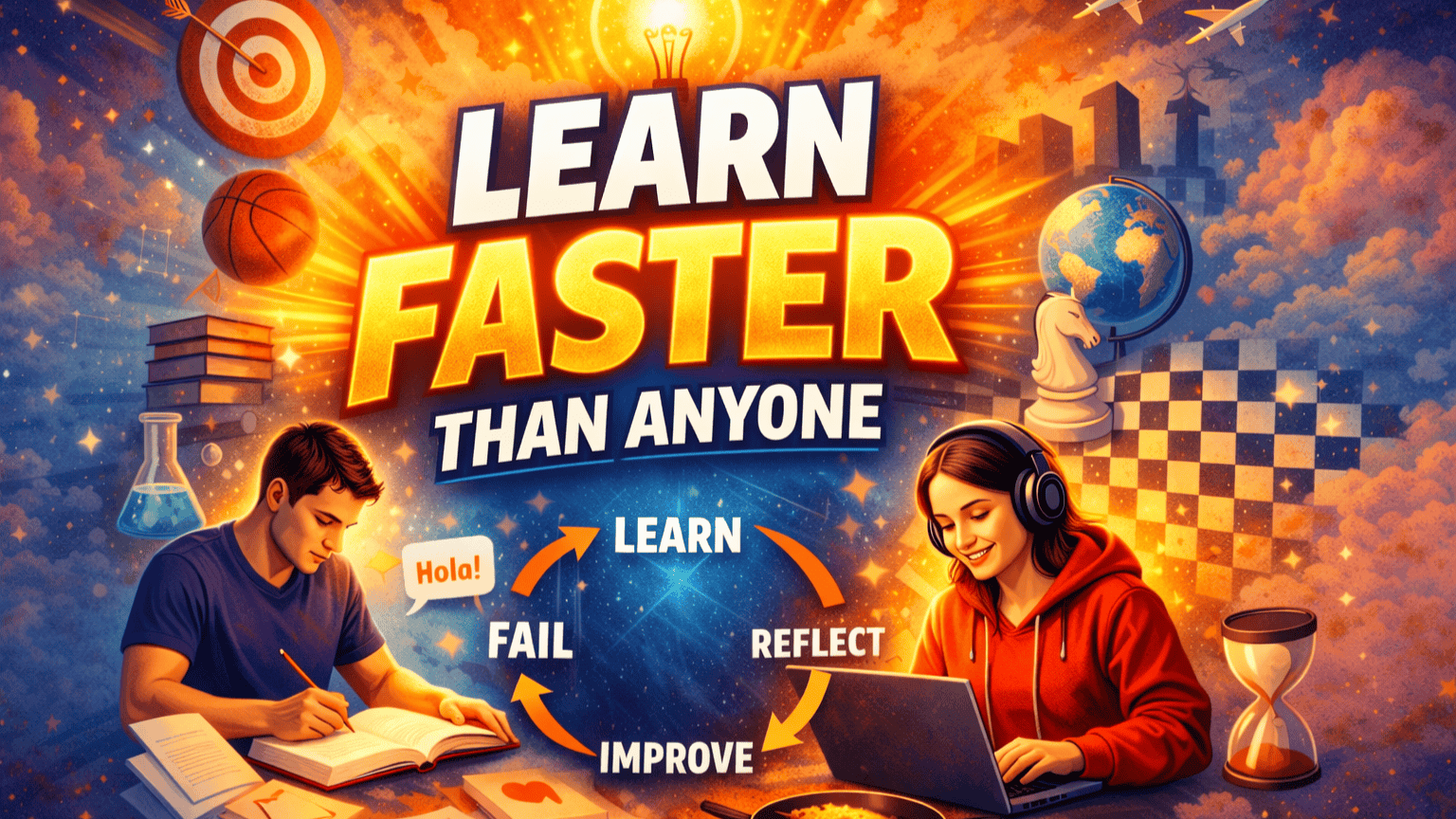
So you want to master new skills faster than everyone around you? Good. You’re in the right place.
I don’t care if you’re trying to cook like a chef, build a million-dollar business, or figure out your purpose in life. There’s really only one skill that separates successful people from everyone else: learning how to learn.
Now, you might be sitting there thinking, “I’ve been learning stuff my whole life. I’m pretty solid at this.” Well, buckle up, because I’ve got some news for you.
Think back to your school days. Teachers would stand at the front of the class, lecture about history or science, then tell you to go home and “study” the textbook. The problem? Nobody ever actually taught you how to learn. No one sat you down and showed you the real techniques for absorbing information quickly and making it stick.
That ends today. I’m about to give you the formula that’ll help you learn anything faster than almost anyone you know.
Table of Contents
1. The 80/20 Rule
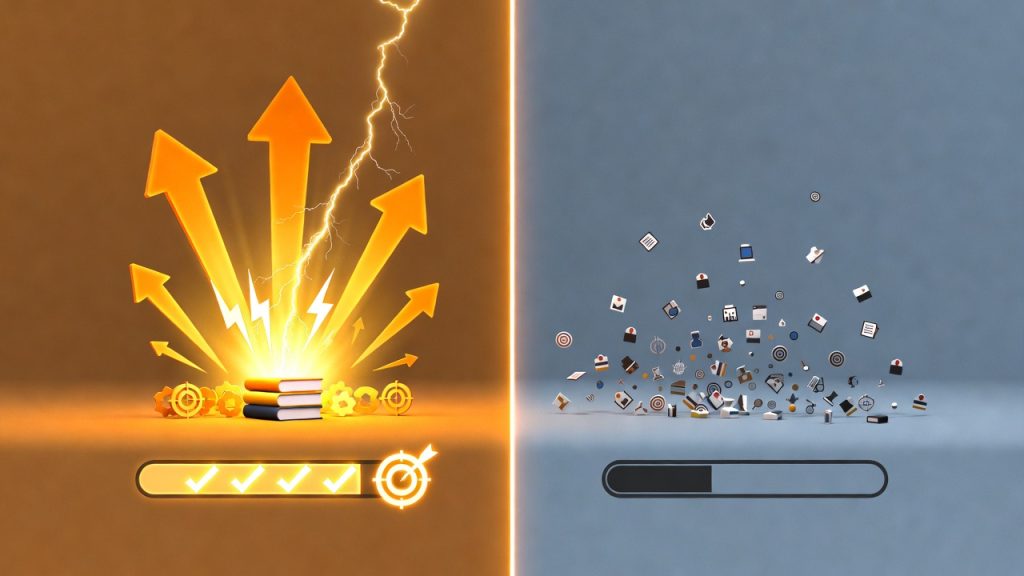
Here’s the first thing you absolutely need to understand: 80% of your results come from just 20% of your effort.
Let that sink in for a second.
What does this mean in real life? If you’re trying to learn Spanish, don’t waste months memorizing every word in the dictionary and every grammar rule in existence. Instead, drill the 1,000 most common words and get comfortable making simple sentences. That’s it.
Want to cook? Stop watching hours of cooking shows and focus on nailing the basics: how to cook chicken properly, boil pasta, make eggs, handle rice. Throw some salt and pepper on there, and congratulations, you’re already better than half the people I know.
Here’s my challenge to you: try to name one skill where getting good at the fundamentals first doesn’t make you better faster. I’ll wait. You can’t do it.
Most people make everything way too complicated. They waste tons of time on tiny details that barely move the needle. When you zero in on the 20% that actually drives results, you’ll blow past everyone else who’s still drowning in the details.
2. Active Recall
Now here’s a cheat code that’ll speed up this whole process, especially for mental stuff like studying for tests or learning languages.
Let’s say you’re studying World War 1 for an exam. Here’s what most people do: they read the chapter, highlight some stuff, maybe read it again. That’s weak.
Here’s what you should do instead: close the textbook. Now ask yourself, “What happened in World War 1?” And I want you to explain it out loud like you’re teaching a class. Just go until you hit a wall and can’t remember something. When that happens, write down what you’re missing, open the book back up, and fill in that gap.
Then do it all over again.
This technique is called Active Recall, and it’s powerful because you’re forcing yourself to fail every few minutes. Every time you can’t remember something, that’s a mini-failure that teaches your brain what it needs to work on. You’re not passively reading, you’re actively testing yourself and exposing your weak spots instantly.
3. Fail Fast, Fail Often
Here’s something that might sound backwards: if you’re not failing constantly while learning, you’re doing it wrong.
When you’re learning something new, your entire goal should be to fail as quickly and as often as possible.
Yeah, I know. You’re probably thinking, “Wait, what? I clicked on this to learn faster, not to fail more.” Just hear me out.
Let’s say you want to blow up on social media. Imagine that from day one, every post you make goes viral with millions of views and thousands of followers. Sounds amazing, right? But here’s the thing: what did you actually learn? Absolutely nothing.
You don’t learn from getting it right. You only learn when you get it wrong.
Think about shooting a basketball. You have to miss the shot first before you can figure out what you did wrong and adjust your form. Same with everything else. The only way you actually learn is by messing up first.
So if failing is where the learning happens, then logically, you want to fail as much as you can, as fast as you can.
Here’s how the learning cycle actually works:
- Try something and fail
- Step back and think about what went wrong
- Get new information — watch tutorials, read articles, whatever
- Apply what you learned and try again
Rinse and repeat. That’s it.
4. Go Slow to Go Fast
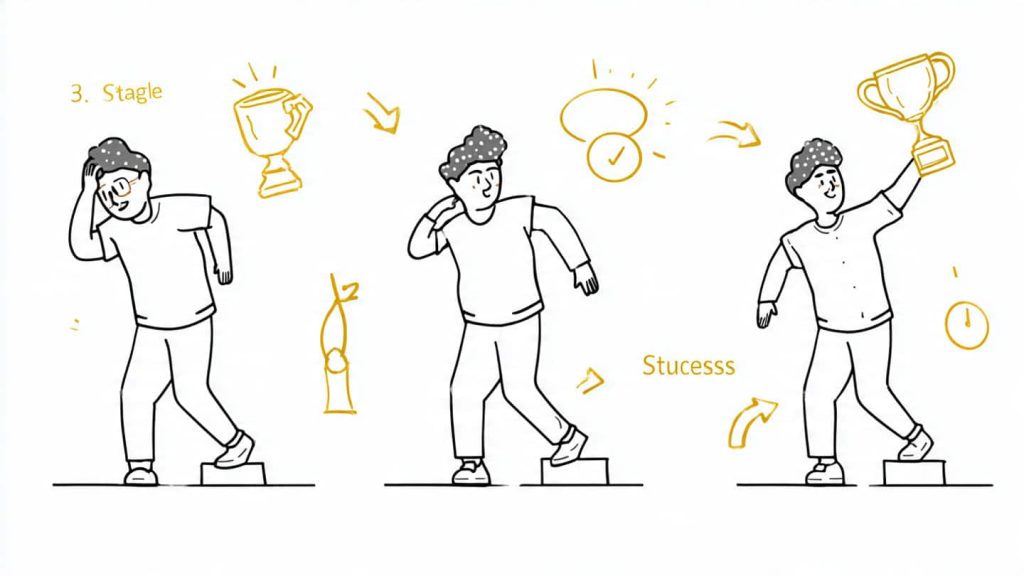
This one’s going to sound completely contradictory, but stay with me: to learn faster, you actually need to learn slower.
I know, I know. You clicked on “How to Learn Anything Fast,” and now I’m telling you to slow down. But here’s why this works.
Your brain is basically a muscle. It can only handle so much new information in one day before it gets fried. If that wasn’t true, we could just study or practice for 18 hours straight and never get tired. But we can’t.
Now think about whatever you’re trying to learn right now. I guarantee it’s made up of a bunch of smaller skills, right? Let’s use cooking again.
If you try to learn knife skills, perfect your seasoning, master sauce-making, nail pasta timing, and learn to grill, all in one afternoon, you’ll walk away maybe 1% better at each thing. That’s five skills with tiny improvements.
But what if you spent that same afternoon just focusing on grilling one piece of chicken? You’d probably improve 20% or more at that one skill. Do the math: you just learned cooking way faster overall.
When you slow down and really build each skill until it becomes automatic, you’ll improve faster than 99% of people who try to do everything at once and end up being mediocre at all of it.
This applies to literally everything:
Learning a new sport? Don’t try to master every technique at once. Nail one movement until it’s second nature.
Getting better at chess? Don’t jump around learning every opening. Master one solid opening first.
Want to be a better public speaker? Work on your pacing and clarity before you worry about using fancy vocabulary.
One thing at a time. That’s the secret.
5. Growth Mindset and Obsession
This is the one that separates people who dabble from people who actually master things.
You need to genuinely believe — deep in your bones — that you can do this.
This is what’s called a growth mindset. It’s the belief that no matter where you’re starting from, no matter how bad you are right now, you can get better if you put in the work.
And honestly? You need to take this belief to a borderline delusional level. I’m serious. If you want to learn something, you need to be so ridiculously confident in your ability to figure it out that failure doesn’t even cross your mind as a possibility.
Think about it. You’ve already done this before. You learned how to walk even though you fell on your face a thousand times. You learned to talk even though you sounded like gibberish at first. You learned to read and write when you didn’t even know what letters were.
You weren’t born knowing how to do any of that stuff. But you figured it out anyway.
So why should this new thing be any different?
Here’s the real talk: if whatever you’re trying to learn actually matters to you, then it’s not just about putting in effort. It’s about complete immersion. It needs to be the thing you’re thinking about in the shower. Before you fall asleep. When you’re zoning out during that boring meeting or class.
If you’re serious about actually mastering this thing, you need to be obsessed with it. That’s the difference between people who kind of learn something and people who genuinely master it.

6. Come Back Tomorrow
The biggest mistake most learners make? They learn something today, feel pretty good about it, then don’t touch it again for two whole weeks.
That’s a guaranteed recipe for forgetting everything.
The fix is simple: come back tomorrow. Just for 10 minutes. It doesn’t have to be some perfect study session.
Jut redo the thing. Say it out loud again. You don’t need new tutorials. You need reps.
Lazy learners don’t cram everything into marathon sessions. They layer the skill slowly, day by day. That’s how it becomes second nature instead of something you have to consciously think about.
The Bottom Line
Learning anything fast comes down to this:
Instead of learning everything, focus ruthlessly on the 20% that actually matters. Ignore the noise. Master what counts. Expand after.
Instead of avoiding failure, create it constantly. Get in that four-stage cycle and move through it fast. Use Active Recall for cognitive learning. Fail, identify what went wrong, adjust, repeat.
Instead of trying to master everything at once, go deep on one component. Make it automatic. Then move to the next. You’ll be genuinely good at something faster than people dabbling in everything.
Instead of hoping you can improve, actually believe you will. You’ve proven it multiple times already. This is just the next one.
Instead of practicing casually, get obsessed. Make this thing constantly on your mind. Look for ways to apply it everywhere. Think about it before bed.
Instead of cramming and ghosting, space it out. Come back tomorrow. Keep coming back. Consistency beats intensity every single time.
Do these things, and you won’t just waste months getting mediocre. You’ll actually master something. And that’s the difference that matters.
If you feel like you can’t focus lately, you should check out these small habits to fix your attention span.



Leave a Reply