

Most “how to stop being stuck” advice tells you things you already know. The real problem usually isn’t that you lack information, it’s that nobody connects the mental shift, the direction, the systems, and the boundaries into something that actually holds together.
Here are the exact steps grouped by what each piece is actually solving, and where you can start and build the life you actually want.
Reset the Starting Point
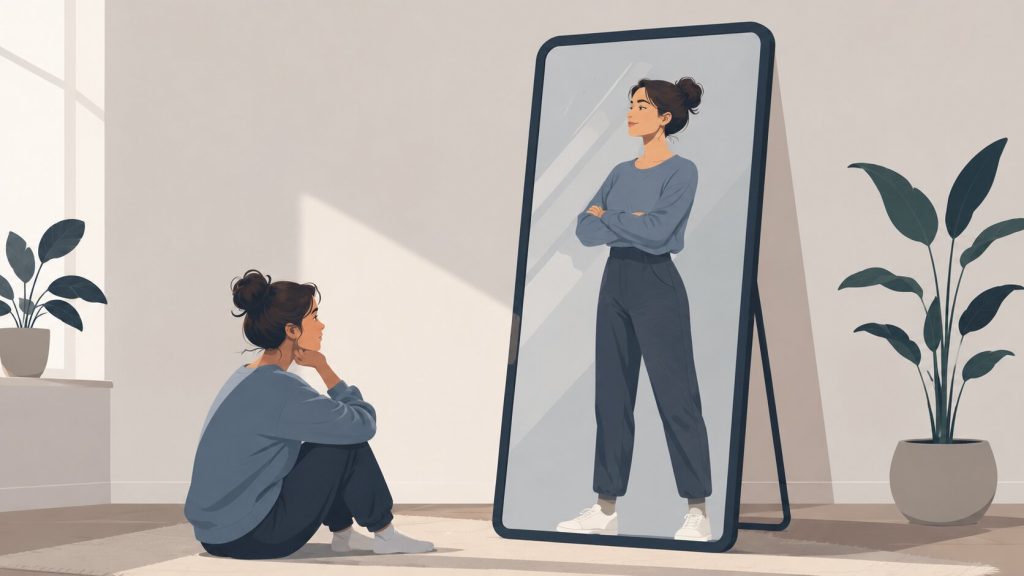
1. Cut off the old version of you
Change doesn’t happen gradually, no matter how it’s usually described. It happens the moment you stop treating your current behavior as optional.
That’s easy to say and hard to actually do. If you look up where the word “decision” comes from, it traces back to a root meaning “to cut off”, which is more literal than it sounds.
Think about a demolition crew clearing a condemned building, they don’t renovate around the unstable wall and hope people avoid it. They tear it out, because a hazard that’s merely discouraged eventually gets used anyway. A real decision works the same way. Decide you’re someone who trains consistently, and skipping “just this once” stops being an option you can quietly fall back on. It’s gone.
This is the part people skip without noticing. They “try” to change instead of deciding to, and trying leaves the door open the whole time.
2. Let disappointment do its job
Sometimes the disappointment you feel in yourself is just… accurate. Not a mood to manage.
If you know you’re capable of more and you’re not doing it, that discomfort is telling you something true.
Don’t Listen to the Feel-Good Nonsense, all those nice memes and those feel-good reels that make you feel like you should accept yourself and be okay with yourself the way that you are.
This connects to step one — the decision gives you permission to stop being who you were, and staying honestly disappointed for a while is often what keeps that decision from sliding back a few weeks later.
Get Specific About the Target
3. Decide what you actually want
A decision to change doesn’t mean much without somewhere to point it. “Get my life together” is a mood, not a goal, and moods don’t survive a bad week.
Ask yourself the specific version of these, across three areas:
Personal — What does your health actually look like day to day? What do you want your closest relationships to look like, with family, with friends? What kind of people do you want around you, and does your current circle match that?
Professional — Who do you need in your corner that you don’t have access to yet, a mentor, a peer group, a specific room you’re not in? What opportunity are you not even being considered for right now? What’s the one skill gap quietly capping everything else?
Financial — What income number would really change your options, not just sound nice? What would that money actually let you do? Is there a cause or person you’d want to be in a position to support, and what would it take to get there?
The people who stay stuck longest usually aren’t short on ambition. They’re short on a written answer. A goal that only lives in your head is easy to quietly let go of. One on paper is harder to walk away from without noticing.
If you skimmed past this, go back. “Be healthier” or “make more money” isn’t specific enough to actually act on.
Build Systems That Don’t Rely on Mood
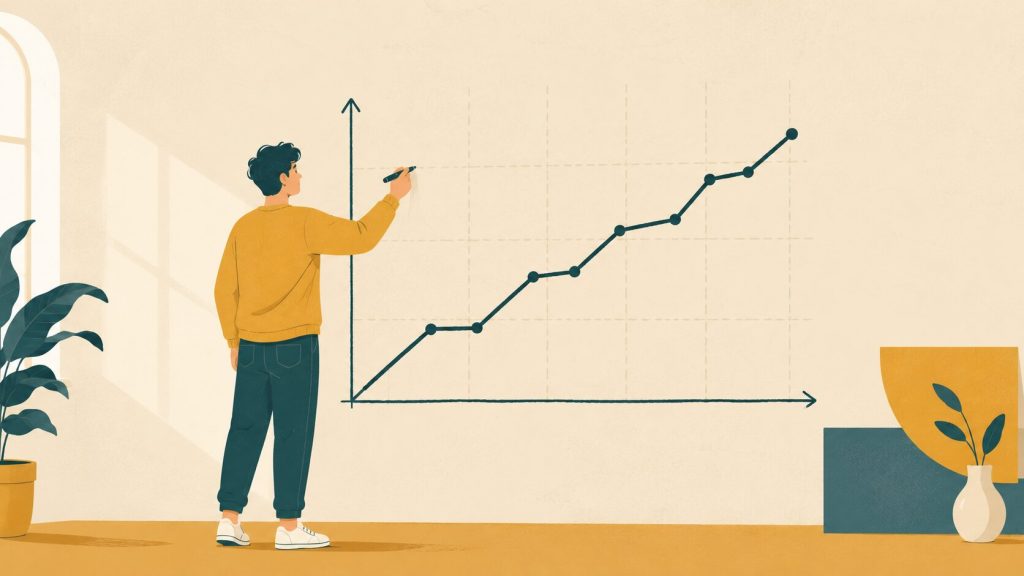
4. Track progress you can actually see
Progress you can’t see doesn’t feel real, even while it’s happening. That’s a big part of why people quit right before things would’ve clicked.
Two habits help here. Plan tomorrow tonight; look at what’s actually coming instead of scrambling to figure it out once the morning’s already half gone. And track a few things tied directly to what you wrote down in step three: sleep, workouts, income, savings, whatever’s real for you.
A number moving in a plain notes app is sometimes the only proof you get on a day when nothing else feels different.
You don’t leap into a new trajectory. You bend into one, slowly, from small tracked moves, which is also why this step gets skipped the most. Not because it’s hard. Because it’s boring.
5. Change the room before you blame yourself
Willpower is real, but it’s unreliable. It tends to run out exactly when you need it most, which makes it a shaky thing to build a whole plan around.
Picture a woodworking shop with a shadow board on the wall; every tool has an outline cut into its exact spot, so a missing chisel is obvious the second you glance over.
The shop stays organized not because the woodworker has more discipline than you. It’s organized because the layout itself makes mess visible and inconvenient.
Your space can do the same thing. The accounts you follow without thinking, the room you sit in, these either work for your focus or against it, and no amount of willpower fully makes up for a room built the wrong way. If one desk or setup keeps producing the same wasted hours, that’s a layout problem. Not a character flaw.
The people in that room matter just as much as the furniture. Isolation is its own trap; working through everything alone, with no one around who’s further along or moving in the same direction, makes it easier to quietly slip back into old patterns because nobody’s there to notice. Being around other people, even just physically, tends to keep you a little more honest than being alone does.
6. Stop confusing learning with doing
Watching how-to videos feels like progress. It resembles the real thing closely enough to fool you. Most of the time, it isn’t progress, it’s just a more respectable way to stay still.
Athletes talk about the gap between film study and practice. Watching game footage sharpens what you understand, but nobody gets faster or stronger from the film room alone. At some point the study has to turn into reps, or it just sits there, unused.
Content works the same way, and it’s gotten worse. There’s a near-endless supply of it now, on every platform, for every goal you could name, which makes it easier than ever to mistake watching for doing.
One fix that actually works: attach one concrete action to whatever you consume before you let yourself move to the next thing. If nothing comes to mind, you probably didn’t need that video in the first place.
Protect Your Time — In Both Directions
7. Set boundaries with people who keep you where you are
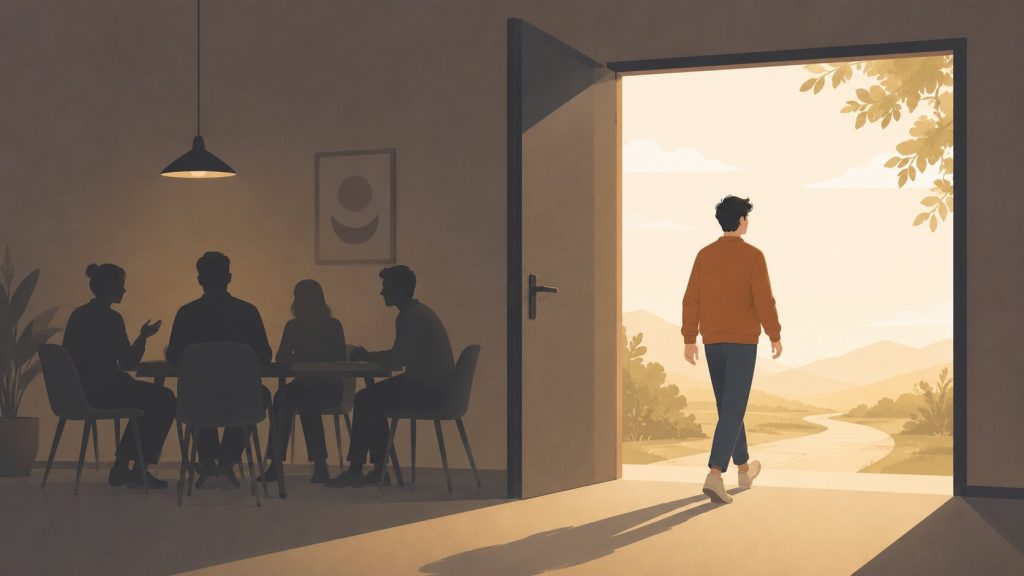
You don’t owe everyone an explanation for being less available. Distance doesn’t need a confrontation to happen.
Get genuinely busy with things that matter to you, and the plans that don’t serve where you’re headed start losing their spot on the calendar on their own.
In practice, this just means looking honestly at your actual commitments and asking which ones move you toward what you wrote down in step three, and which are just habit.
Worth saying clearly: none of this makes the other person wrong. It’s not that they did something bad, or that the relationship was a mistake. It’s just that you’re building something new right now, and that takes time you don’t have to spend the way you used to. You can hold both at once: nothing against them, and still no time for it this season.
Struggling to set boundaries? Let’s change that in this post.
8. Say no to yourself too
The harder boundary is usually with your own excuses, mostly because it doesn’t feel like avoidance while you’re doing it.
Errands, “quick” tasks, busywork you invented yourself — they all expand to fill whatever time you don’t protect. None of it’s wrong on its own.
A grocery run is just a grocery run. But stacked together, it quietly becomes a way to stay busy without doing the one thing that actually matters and feels harder to start.
Ask the same question you’d ask about someone else’s request: does this move you toward your goals and what you wrote down, or is it just avoidance wearing a to-do list?
The Bottom Line
Getting unstuck isn’t about one massive change.
It’s about:
- Making the decision
- Accepting where you are
- Knowing where you want to go
- Taking daily action to get there
The old version of you? That don’t exist anymore. You’ve already decided to change just by reading this far.
Now go make it happen.
You don’t need a total life overhaul to see results. These small daily habits are the secret to changing your life for the better.