
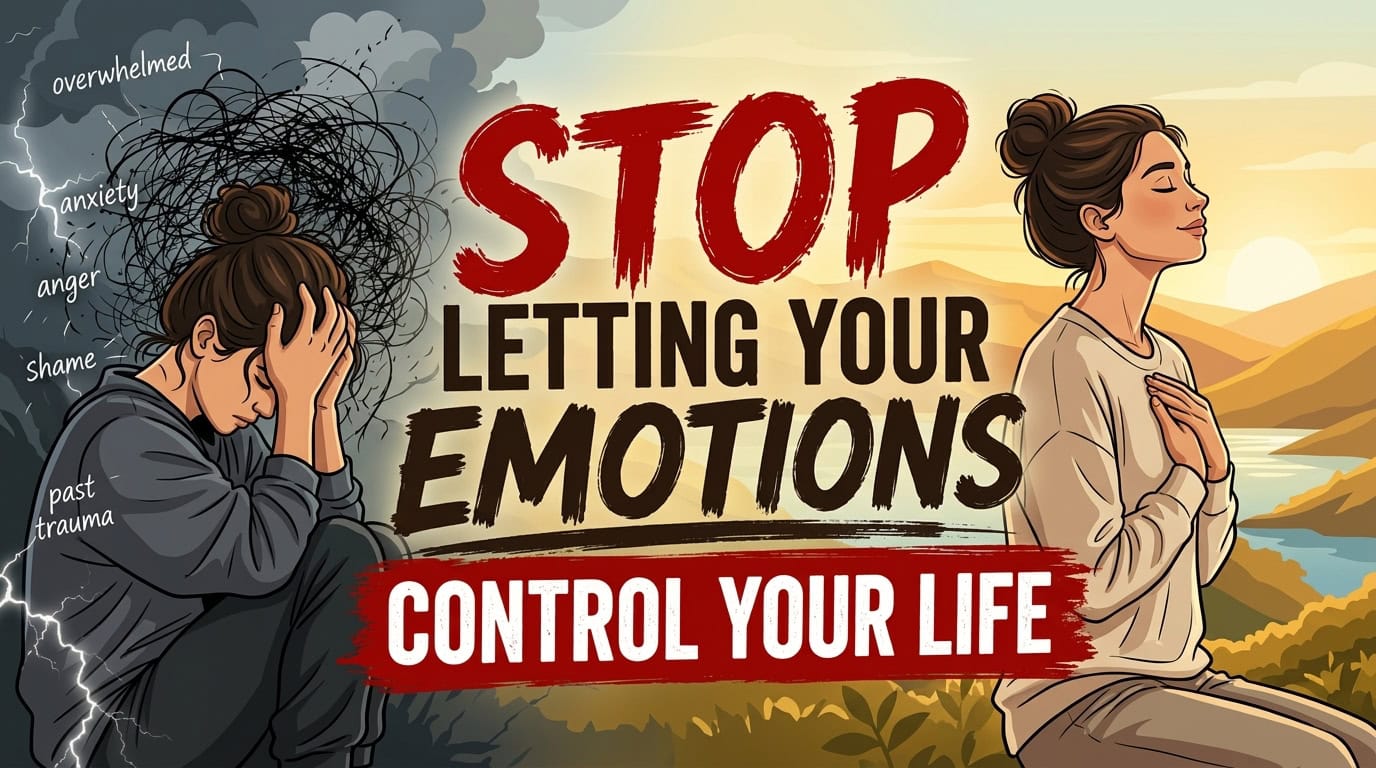
There’s a common idea that healing from trauma means you need to “feel your feelings.” People often encourage you to explore your emotions, trust your emotions, and sit with your emotions.
But for many people who grew up with trauma and developed complex PTSD, the problem isn’t that they’re out of touch with their feelings. The problem is the opposite. Their feelings are too much, too intense, too consuming.
This is called emotional dysregulation.
In many ways, emotional dysregulation can cause just as much damage as emotional numbness. It can feel like a wrecking ball or a tornado that suddenly appears and destroys everything in its path.
What Emotional Dysregulation Actually Looks Like
When your emotions are dysregulated, your life gets organized around the chaos of your emotional states. Your relationships, your career, your sense of self. Feelings arrive at the wrong times, at the wrong intensity.
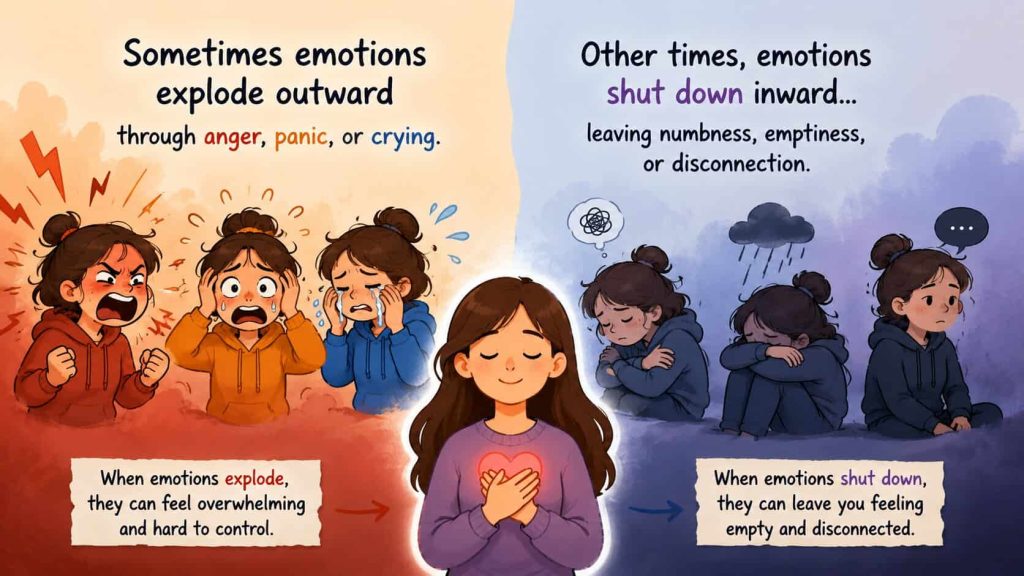
Sometimes emotions explode outward. You might cry at work, explode at a customer service rep over something minor, or find yourself completely unable to contain a reaction that, in the cold light of day, you know was disproportionate.
It can also go the other way. After a big emotional outburst, many people with CPTSD experience a sudden flatness, like a light bulb blazing and then going dark. That emotional shutdown is part of the same pattern, just the other end of the swing.
Here’s a scenario.
Imagine your partner forgets a dinner party you planned and shows up an hour late without calling. That’s genuinely inconsiderate.
But the tidal wave of feeling that rises in you, the rage filling your chest, the headache forming, the desperation to hold it together in front of your guests while barely managing, that intensity has roots much older than tonight.
Old feelings of being ignored and abandoned come flooding up from the past, and suddenly you’re not just dealing with one forgetful partner. You’re dealing with a lifetime.
In the moment, those feelings seem like the only reasonable response anyone could have.
Later, with clarity, you realize your reaction became the problem of the evening. Shame follows. You might emotionally shut down completely. This is how emotional dysregulation damages relationships.
That gap, between how real it felt and how it looked, is the hallmark of dysregulation.
And over time, this pattern quietly drains love and trust from relationships that could otherwise be getting deeper.
Why “Just Feel Your Feelings” Doesn’t Always Help
Venting, expressing anger in the heat of the moment, demanding to be heard right now. These feel urgent and necessary when you’re dysregulated, but they tend to escalate the overwhelm rather than relieve it.
Your thinking gets distorted. You say things you don’t mean.
And the sense of urgency itself, that feeling that this must be resolved immediately, is usually not a reliable signal. It’s your old emergency response activating over something that is, at its core, about communication.
For people with CPTSD, what’s often needed is the opposite of more expression. It’s self-regulation — Getting tools in your belt. Learning to catch the plane before it takes off.
How to Regulate Emotional Overwhelm (The Tools)
1. Notice it’s happening
The first step is simply naming it to yourself: I’m having an emotional reaction.
That small act of self-awareness, having a part of you that can stand outside the storm and observe it, is the beginning of real change.
2. Slow everything down
Many trauma survivors are highly sensitive to feeling rushed, and panic accelerates that.
Deliberately slow the pace of conversation. Take long pauses. Take your time choosing words. Slowing down alone can reduce overwhelm enough to recover your perspective.
3. Use the dial technique
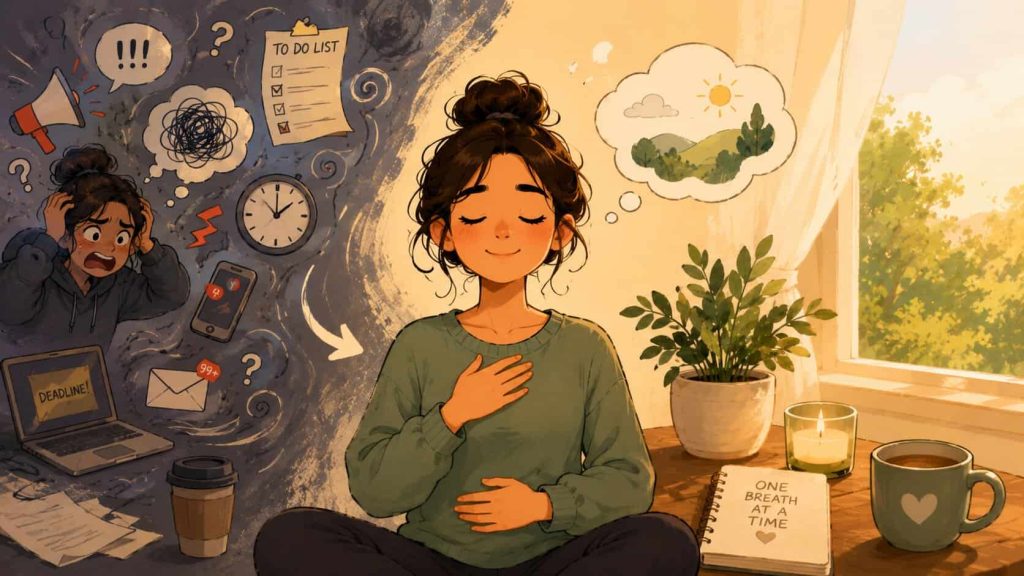
If you’re about to cry at an inconvenient moment, imagine a knob just below your belly button, set on a scale of one to ten. Picture yourself dialing it down to two.
You’re not shutting your emotions off. You’re just narrowing the opening slightly. It sounds almost too simple, but many people find it surprisingly effective.
4. Practice restraint of pen and tongue
Don’t say or write anything when you’re angry. Not texts, not emails, not the speech you’ve been rehearsing.
Venting while dysregulated distorts your thinking and can cause damage that creates new wounds.
Promise yourself you’ll express it just later, when you’re calm. And then keep that promise.
5. Take a time-out without drama
You don’t owe anyone an explanation.
At work you might say: I have another call, can I come back to this in 15 minutes? With a partner or friend: this conversation matters to me, can I take a little time and come back to it?
Most people will accept this, and everyone benefits from you showing up regulated.
Check out this post on how to say no, when people ask for your time, or you don’t feel like doing it.
6. Write it out
Getting fearful and resentful thoughts onto paper, not to share but just to discharge, can be genuinely life-changing. You can do it anywhere: a bathroom, a parked car, a notebook at your desk.
It gets the pressure out of your nervous system without throwing it at another person. Because the hard truth is, even if someone wanted to re-regulate your nervous system for you, they can’t. That’s an inside job.
7. Move your body
Exercise can physically rinse stress chemicals out of your system. Run the stairs, take a brisk walk, do whatever gets your heart rate up.
Sometimes you can’t think your way out of dysregulation. You have to move your way out.

8. Use cold or warm water
Splash cold water on your face, or wash your hands slowly in warm soapy water and pay attention to the sensation. This isn’t a distraction trick. It’s a way of coming back into your senses, back into the room, back into your body.
When you’re dysregulated, parts of your brain are going dim. Sensory grounding helps bring them back online.
9. Talk it through
Talking to a trusted person who isn’t involved in the conflict can sometimes help.
But be honest with yourself about whether the conversation is actually calming you down, or whether you’re going deeper into the story, getting louder, talking faster, talking over people.
Those are signs you’re escalating, not regulating. Talking can sometimes be a gateway to more dysregulation, not less.
Everything you need to say can still be said. Just not necessarily right now.
Check out these tips for staying calm and confident when someone insults you.
Final Thoughts
When you develop enough self-awareness to catch yourself going over the top, even before you understand why, even before you’ve processed anything, and you choose to use a tool instead of escalating, something starts to shift.
The shame of overreactions begins to lift. Relationships that felt perpetually strained start to feel safer, deeper, more honest.
You’re not suppressing your feelings. You’re postponing the expression of them until you can do it with fairness, clarity, and care.
And that version of expression, calm, proportionate, loving, actually lands. It gets heard. It strengthens connection instead of eroding it.
That’s the goal. Not fewer feelings. Just better timing.
Starting your day with the right habits makes a huge difference. Here are a few quick morning rituals to help you stay positive.
This post is based on insights shared by Anna Runkle of Crappy Childhood Fairy, who teaches people to recognize and heal adult symptoms of early trauma.