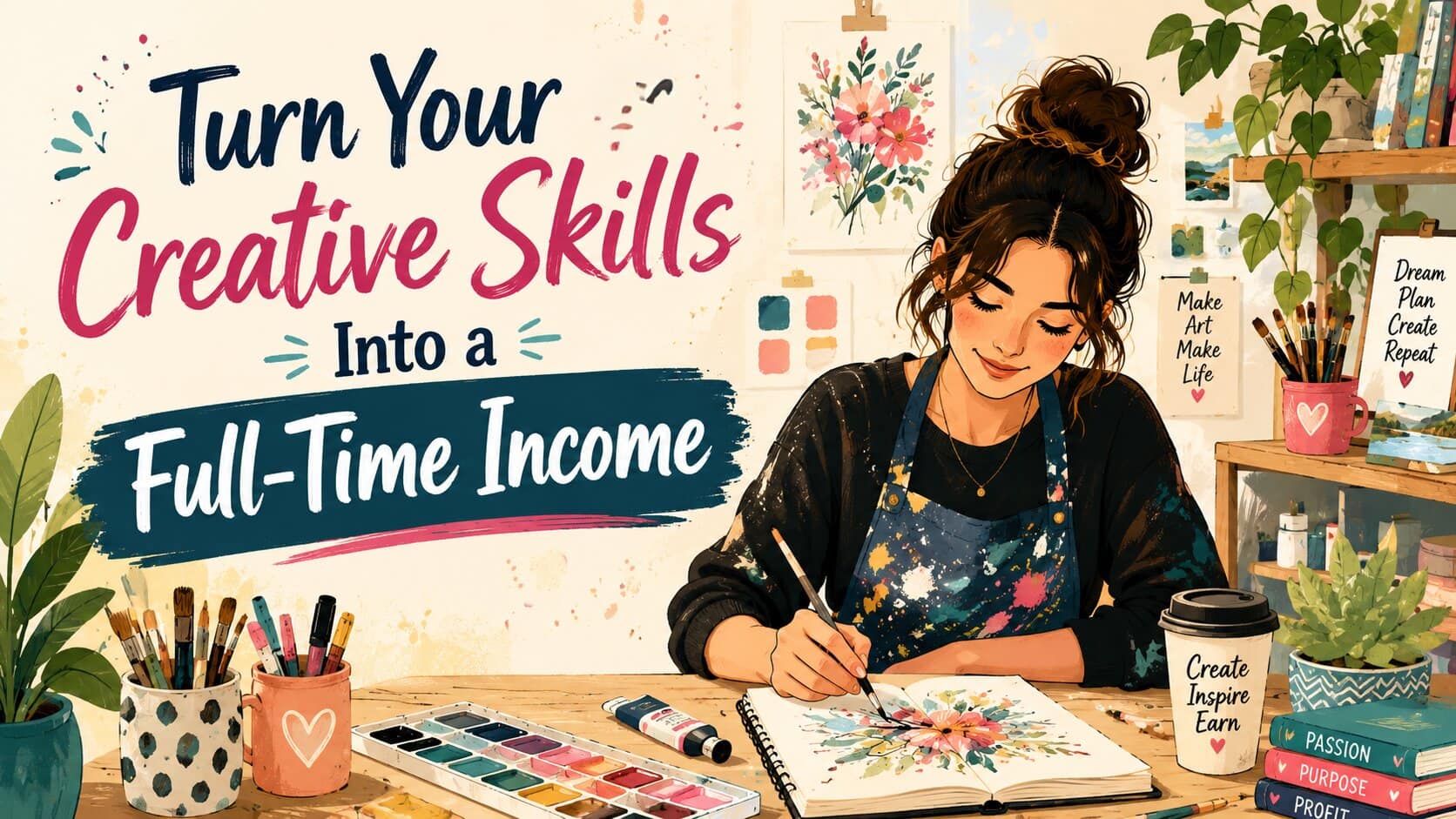
If you’re an artist looking for ways to earn money from your creativity, you don’t have to fit the stereotype of the “starving artist.” There are more opportunities than ever to turn your skills and talent into a profitable business, or even a full-time career.
Artists can generate income in many different ways. Whether you create traditional artwork, digital illustrations, designs, or crafts, there’s likely a business model that fits your style and goals.
Here are some of the best ways artists can make money from their work.
1. Live Stream Your Creative Process
Platforms like Twitch and YouTube let you broadcast yourself drawing, painting, or sculpting in real time.
Many people enjoy watching artwork come to life, making live content both entertaining and educational.
How to monetize it: You can earn through viewer donations, exclusive content like behind-the-scenes tutorials, or ad revenue once you’re eligible.
Just keep in mind that it takes time and consistency to build an audience. So if you’re comfortable being in front of a camera and enjoy engaging with viewers, this could be a great way to turn your passion into an amazing online community.
2. Sell Arts Prints Online
People are always shopping for art to decorate their homes, offices, or to give as gifts.
Two ways to approach this:
- Print yourself for higher profit margins, but it requires investing in a quality printer, paper cutter, ink, and shipping supplies.
- Use a print-on-demand service like Printful, which handles printing and shipping for you. It’s more hands-off, but slightly less profitable per order.
A few things to keep in mind: make sure you scan your originals at high resolution and focus on a specific niche. It’ll be much faster to gain traction and build a following of interested audience.
3. Create Stationery and Paper Products
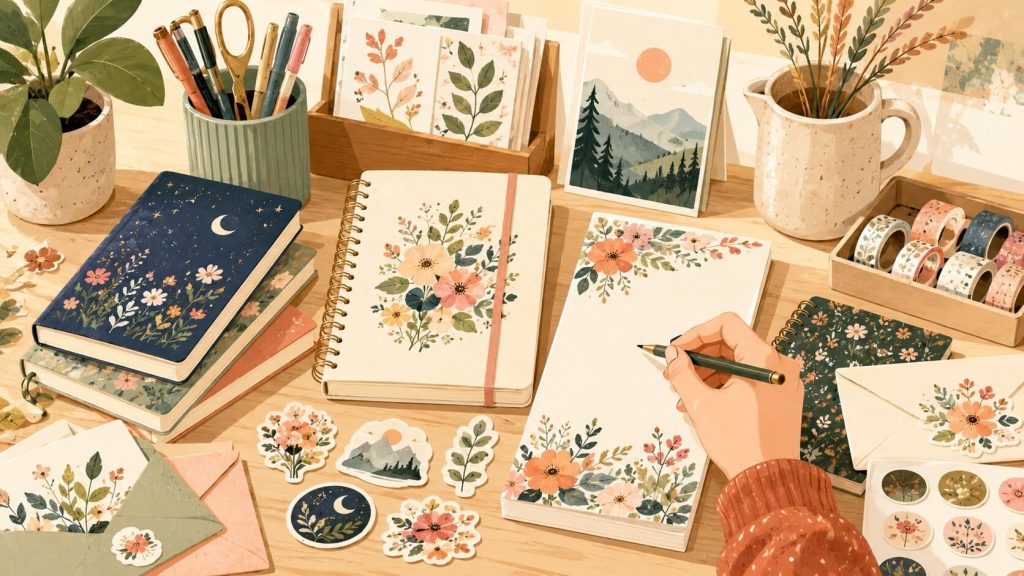
Since we’re talking about selling physical products, your style of art may work really well as stationery and paper products like notebooks or cute little stickers. This works well with print-on-demand services, or you can explore creating your own online shop.
The downside is that competition is stiff, so a distinctive niche and cohesive art style are essential.
Great example: Marshmallow Studio. Beautiful hand-drawn art turned into irresistible stationery.
4. Sell Designs on Apparel
Selling your art on clothing is straightforward via your own shop or platforms like Redbubble.
T-shirt designs can be simple with quotes on them, but those are easily replicable by copycats, which no artist likes to deal with. So focus on elaborate, detailed designs rather than simple text-based ones. They’re harder to copy and function as wearable art.
There’s a lot of competition out there, so you have to make your designs unique and eye-catching.
Great example: Brazilian studio Illustrata. Their designs are super cool and a great reference for what works well on apparel.
5. License Your Art
Licensing lets you partner with companies who want to use your art on their products, like kitchenware, greeting cards, and more. You can use platforms like Spoonflower or work with licensing agencies to connect with these businesses.
The big win here: It’s passive income. You create the work once and get paid repeatedly.
It can be competitive to get your art licensed, and you might not always have full control over how your art is used. But if your art style translates well to surface patterns or different products, licensing could be a great way to see your work in big stores like Trader Joe’s or Target.
Great example: Lettering artist Jessica Molina, who has licensed her work for everything from homewares to clothing.
6. Sell Digital Products
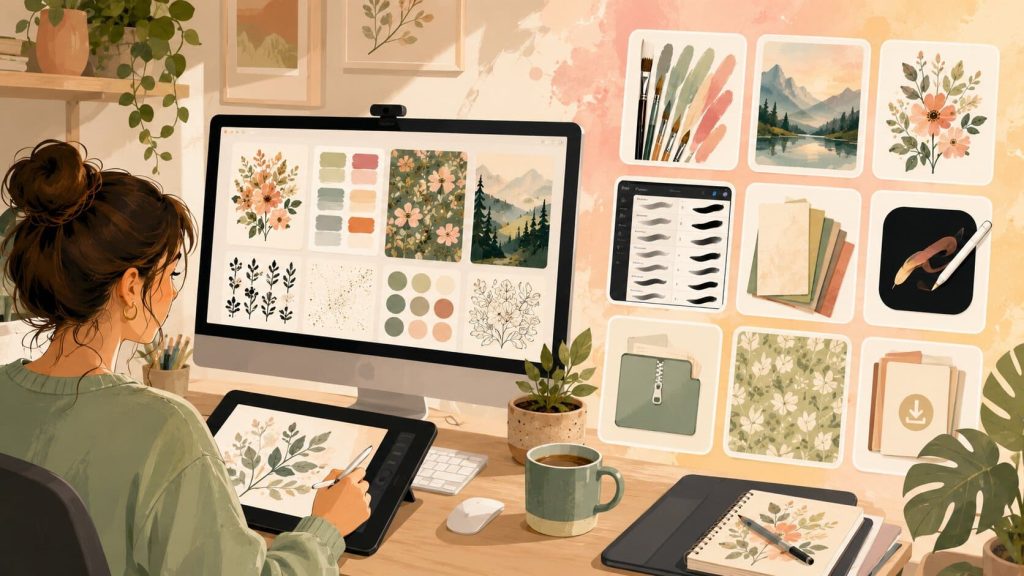
This is a cool way to offer creative goodies that people can use instantly in their own projects. These will be things like custom brushes for digital art programs like Procreate, seamless texture packs artists can use in their own work, or illustrations and branding elements that business owners can use in their business.
The beauty here is that you create the digital file once and people can purchase it over and over again. Make sure your offerings are high quality, unique, and solve a specific need.
Great example: True Grit Texture Supply, a huge company that sells brushes, tools, and effects for a range of creative software.
7. Sell Graphics on Stock Marketplaces
If you’re a digital artist and you’re comfortable learning how to use digital software for your art, definitely consider selling graphics or illustrations on stock image sites like Shutterstock or Creative Market.
These are massive libraries of commercial creative assets. Upload your illustrations and earn passive income when designers and businesses license them for ads, websites, or packaging.
The key to standing out is researching what buyers are actually searching for and filling gaps in what’s already available.
8. Build a Membership Community
Membership platforms like Patreon lets your fans support you directly with monthly payments in exchange for exclusive perks: early access to new work, process videos, custom sketches, or tutorials. It creates reliable recurring income and a genuine sense of community.
Building a loyal following takes time and effort, but if you’re passionate about connecting with your audience and offering them something special, Patreon could be a fantastic way to monetize a following.
Great example: Acrylic artist Michelle the Painter launched her Patreon in 2020 and now has over 6,000 patrons paying between $3 and $12 a month.
9. Online Courses
If you love teaching, platforms like Skillshare and Udemy let you create and sell educational content at scale, or you can build it on your own platform.
You create the course material once and students can keep enrolling over and over again. It’s great semi-passive income.
It’s not totally hands-off though. You’ll want to post updates, stay responsive to student questions, and keep content fresh over time. But if you love teaching, it’s one of the best ways to turn your knowledge and experience into an income stream.
10. Live Workshops
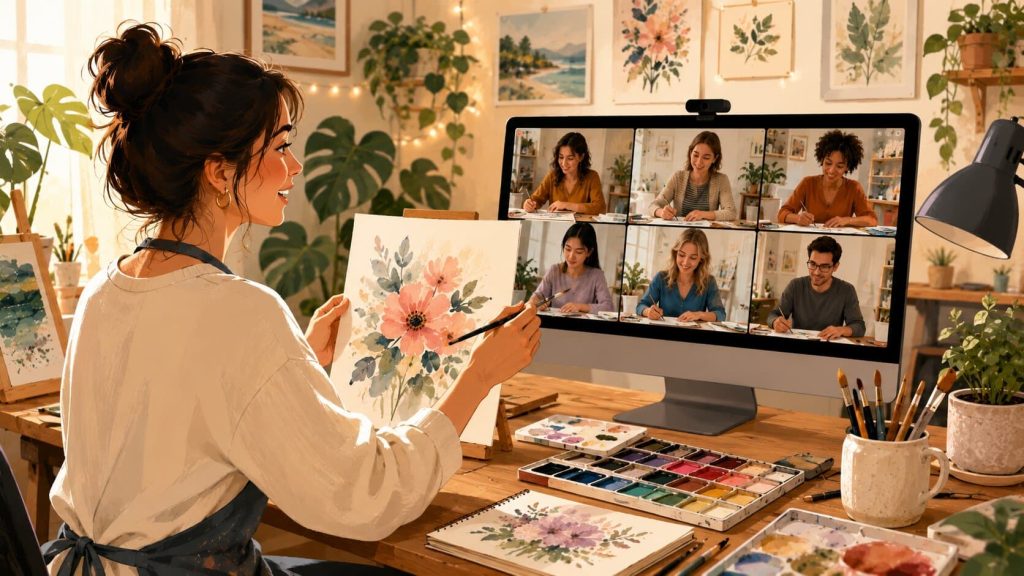
This is slightly different from selling courses on learning platforms. For live workshops, you can teach online via Zoom, live stream to a private group of students, or teach in a real life setting like at an art supply store.
You can potentially charge more for live instruction, and the interactive learning experience can be really fun and rewarding for everyone.
You could also sell supply kits where you provide everything students need to complete the project. It’s a smart way to add extra revenue per student.
Pro tip: Consider running live workshops first before recording a course. It’s a great way to iron out all the kinks before committing everything to a format that’s harder to change later.
11. Offer One-on-One Coaching
You can sell personalized advice, critiques, or guidance to aspiring artists through paid online consultations. The key is to clearly define your areas of expertise and niche down to serve a particular group of artists or students.
12. Work as a Freelance Illustrator
Pitch your work to magazines, blogs, and websites that need visuals for their content. Publications covering travel, fashion, food, or science are constantly looking for illustrators.
It can be competitive and rates can vary, but that’s not to say it’s impossible. Have a great portfolio, a solid pitch and follow-up strategy, and don’t be shy about building relationships with publications over time.
13. Start an Art Blog
If you love writing, you can share your knowledge and experience through a blog. Write about art techniques, review art supplies, or offer tips for aspiring artists, then monetize through ad revenue, sponsorships, and affiliate marketing.
You can work with art supply stores or course platforms to earn commissions when people buy through your affiliate links.
To do this well, you need to create consistent, high-quality content that’s so valuable it’s easy to attract a big readership.
Great example: Art Bar Blog, a site packed with art projects for kids, classrooms, DIY home activities, sensory play, seasonal ideas, and so much more.
14. Sell 3D Models, Textures, and Fonts
Beyond regular stock marketplaces, there are marketplaces dedicated specifically to 3D assets, textures, and fonts.
Platforms like TurboSquid, CubeBrush, 3D Ocean, and CG Trader are some options to look at.
Identify what’s in demand, study current design trends, and create assets that solve real creative problems for designers and studios.
15. Membership Communities and Art Challenges
If you already have an engaged following, or are actively building one, consider creating paid art challenges or interactive tutorials on a platform like Patreon. It’s more dynamic than a static course.
Monthly themes, live critiques, and community engagement keep subscribers coming back and make the experience genuinely fun for everyone involved.
Great example: Character Design Challenge, a community of character artists with a Patreon offering monthly paid challenges, special rewards, and the chance to be spotlighted to their huge online audience.
16. Enter Art Competitions and Apply for Grants
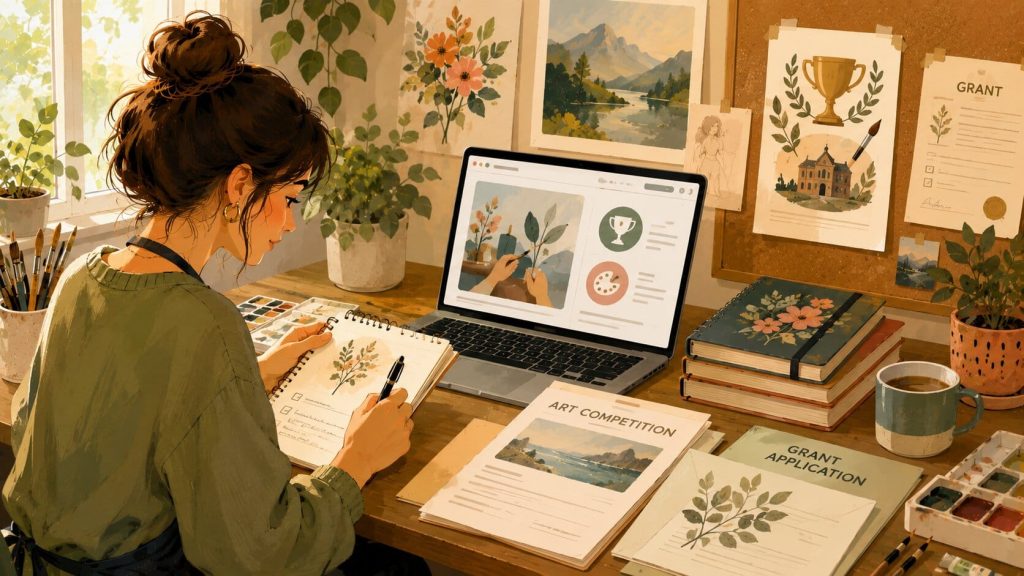
There are many competitions and grant programs specifically for artists, with prizes ranging from cash rewards to gallery representation. all of which can really help your artistic career and lead to future income streams.
Research opportunities that align with your style and career goals, pay close attention to submission requirements, and apply consistently.
Great examples: The National Endowment for the Arts, which supports artists across various disciplines, and the Halstead Grant, a highly respected opportunity specifically for jewelry makers.
17. Graphic Design Services for Businesses
If you work well with clients and communicate well visually, offering design services to businesses can be a real goldmine. Business owners have a lot of graphic needs and many of them have real budgets to spend.
High-demand niches to consider:
- Branding and visual identity: logos, packaging, typography, website layouts
- Social media graphics: custom content for platforms like Instagram
- Paid ad creatives: graphics designed specifically to grab attention and drive clicks
- Book covers and children’s book illustrations
18. Create and Sell Coloring Books
Coloring books sell consistently well and are relatively inexpensive to produce. You can target kids, adults, or go even more specific. Fantasy themes, mandalas, florals, cats, the options are wide open.
Like prints or digital products, you create the content once and sell it repeatedly without additional work. That’s leverage, and it’s one of the biggest advantages artists have.
19. Sell Artwork Through Galleries
Selling through galleries is still a meaningful path for many artists. Here’s how to get started:
- Research galleries showing artists at a similar career stage to yours.
- Prepare 10 to 15 of your strongest pieces alongside a professional artist statement.
- Reach out via email, follow each gallery’s submission guidelines, include a few low-resolution images and a portfolio link, and be persistent with follow-ups.
Gallery commissions typically run around 50%, but that covers the cost of maintaining a physical location and someone else doing the selling for you. For many artists, that’s absolutely worth it.

20. Take Custom Art Commissions
Taking custom commissions works best when you’ve developed a strong, distinctive style and have a fanatical community.
Open up spots publicly, and if demand is high, you’ll find yourself with a waiting list stretching months out.
Great example: Artist Helen Violet, who creates hyperrealistic hand-sculpted portraits of dogs and other pets. The level of detail she brings to each piece, right down to the fur, paw pads, and collar, has earned her a devoted clientele and a long queue of waiting customers.
Final Thoughts
Being an artist no longer means struggling financially. The biggest advantage creatives have is the ability to create something once and continue earning from it repeatedly.
The most successful artists rarely rely on only one income source. Instead, they combine multiple revenue streams, physical products, digital products, teaching, freelancing, memberships, and commissions.
Start with one method that fits your skills, stay consistent, and slowly build multiple income streams around your creativity. Your art can absolutely become a business. Speaking of business, here’s a guide on how to start a successful business from scratch.