
Have you noticed lately that your face looks puffier than it used to when you were younger? Maybe your eyes look more tired than they should, your waistline keeps growing even though you haven’t really changed what you eat, and no matter how much sleep you get, you still wake up exhausted.
Most people blame it all on aging, but what if these visible changes are happening because your cortisol, the stress hormone, is running higher than it should be?
When cortisol stays elevated for too long, it doesn’t just leave you feeling drained. It actively works against your health. And it leaves clues written all over your body if you know where to look.
Today we’re going to talk about symptoms of high cortisol that you can literally see in the mirror, on your face and all over your body. We’re going to go through these from mild and early all the way to more severe and later signs.
What is Cortisol?
Cortisol is a hormone produced by your adrenal glands, two small glands that sit on top of your kidneys. It’s often called the “stress hormone” because your body releases it in response to stress, but it actually does a lot more than that.
At its core, cortisol’s job is to mobilize energy and to help your body respond to danger or high-pressure situations.
Signs of High Cortisol
Sign #1: Dark Circles or Tired-Looking Eyes
This is very often one of the earliest signs of high cortisol.
Cortisol will disrupt your sleep cycle, and when you don’t get the proper amount or quality of sleep, your eyes can develop dark circles or look sunken. The reason this happens is that cortisol opposes your sleep hormone melatonin.
The body is really, really smart. When we’re under stress, cortisol is released to generate resources so we can deal with that stress, so we can run, fight, raise blood sugar, and get more energy.
But stress is the opposite of peace, and in order to go to sleep, we need to be peaceful. We need to relax and wind down. So when cortisol is high, melatonin doesn’t get a chance.
High cortisol disrupts your sleep cycle by interfering with melatonin (your sleep hormone).
And when your sleep suffers night after night, your eyes start to show it.

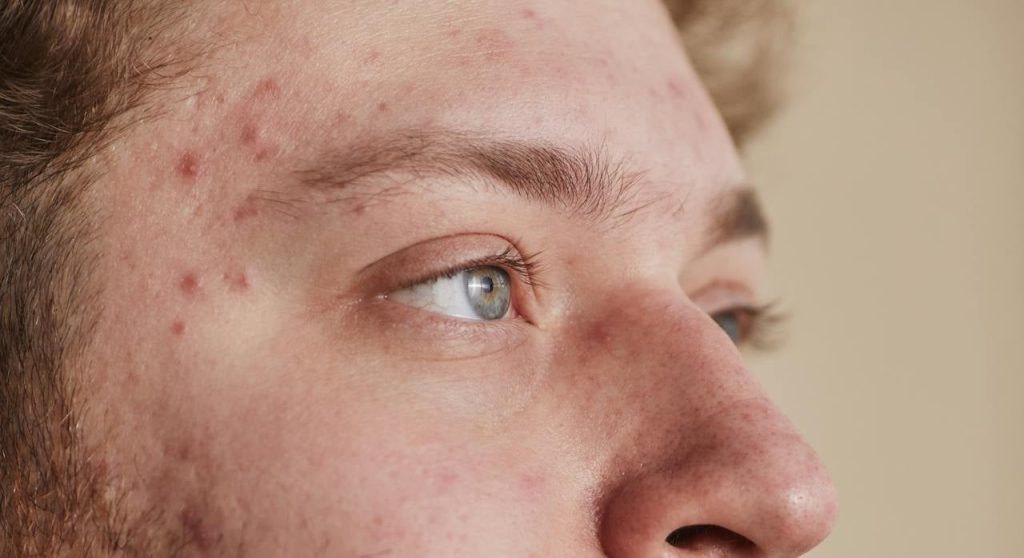
Sign #2: Acne or Oily Skin
Cortisol will stimulate, and in fact overstimulate the oil glands in your skin.
This doesn’t just happen to young people. When it’s driven by cortisol, it can happen to older and middle-aged people too, and you could get a flare-up or an outbreak.
But it’s also really important when we look at signs like this to understand them in context. Just because you have acne as an adult does not automatically mean you have high cortisol, because there are many other things that could cause it.
The number one thing that is extremely common these days is a disrupted gut biome, a poor bacterial culture.
Because of a disrupted gut, we have a certain level of gut inflammation, which increases the permeability of the intestinal membrane.
A lot of toxins and things start getting out into the blood that were never supposed to cross that gut membrane. When these toxins get into the bloodstream, they create system-wide inflammation, allergies, and sensitivity reactions, and a lot of people end up with skin issues as a result.
In fact, it’s probably the most common reason for skin issues today, but high cortisol is absolutely still on the list.
I’ve talked about gut health and its fixes here in detail.
Sign #3: A Puffy, Rounded Face
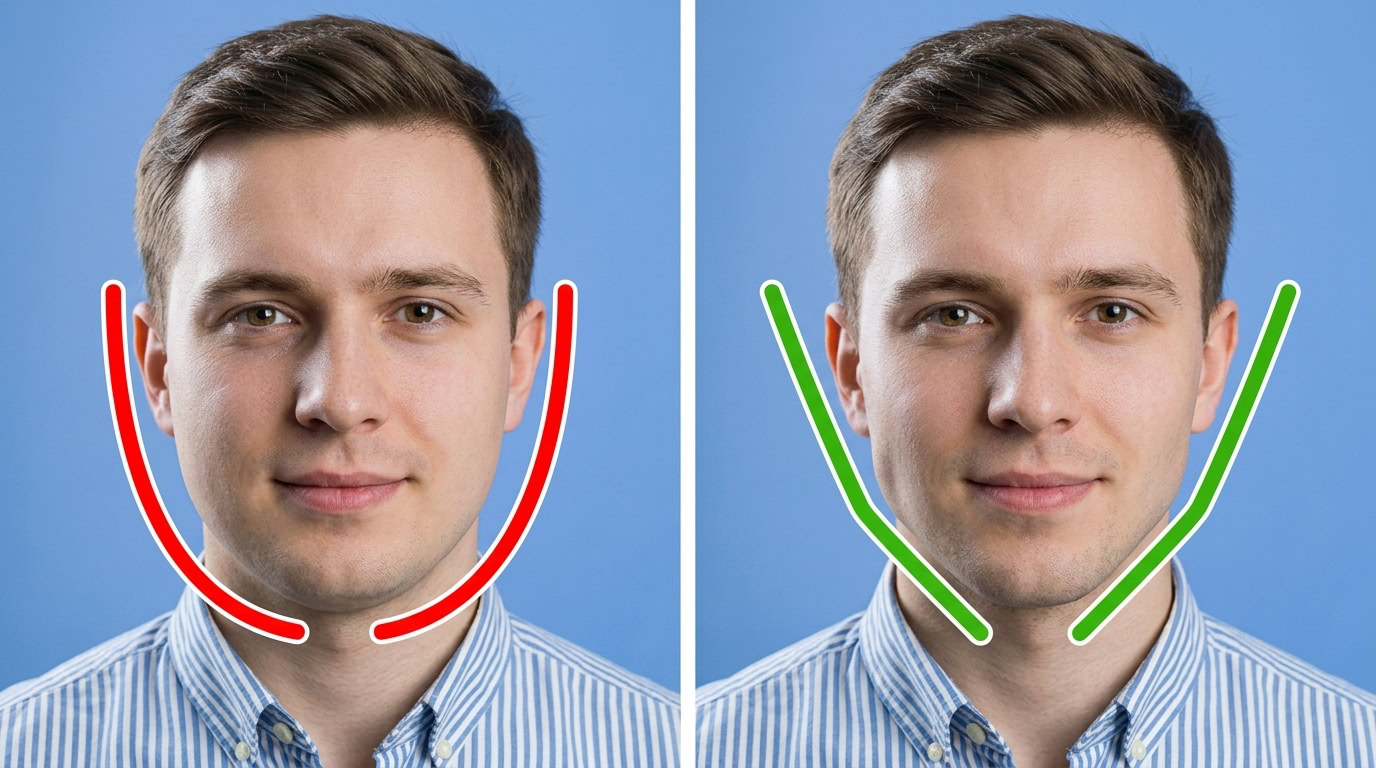
A face that looks fuller or more swollen than usual can come from two different things happening at the same time.
First, there’s fluid retention. Cortisol and aldosterone are both adrenal hormones. They’re sometimes called mineralocorticoids because they regulate how the body handles minerals, electrolytes, and water.
If your cortisol levels go up, chances are your aldosterone levels might also go up, and that can cause a certain amount of fluid retention that gives your face and neck a fuller appearance.
Second, cortisol also changes where your body stores fat. These fat deposits are very specific when they’re due to cortisol. They’re going to happen on your face, your neck, and your trunk.
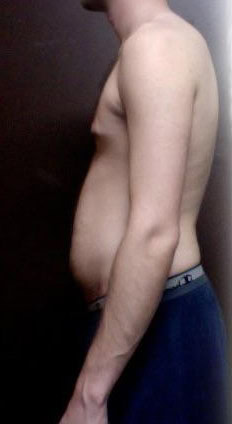
The face becomes a little more rounded. On the neck, fat deposits mostly on the upper back, that’s what’s called a buffalo hump. If you push at it, it feels like a fat pad right at the top of the thoracic spine. And then of course the hallmark sign is on the trunk, on the belly, that’s what we call intra-abdominal or visceral fat.
Sign #4: Postural Changes
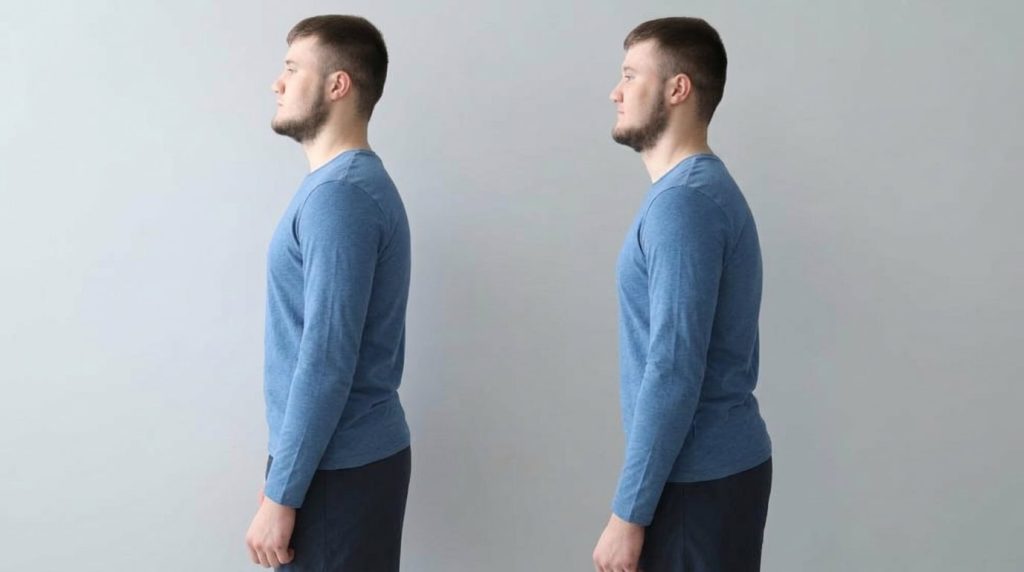
Posture might not be the first thing that comes to mind when you think about cortisol, but there are actually two different mechanisms stress affects how you hold your body.
The first is immediate; it happens in a split second. That’s your sympathetic response, your immediate neurological stress response.
When you have an acute stress response, your body goes into a defense posture. Your flexor muscles turn in, your shoulders roll forward and pull up, your jaw clenches down.
These are all defense mechanisms. If you get attacked, pulling your shoulders up protects your neck. As a result, the most common thing you’ll see is a hunched, leaning-forward posture.
The second mechanism is more long-term, and this one happens at the biochemical level.
Cortisol will weaken postural muscles over time because it steals protein from the large muscles and converts it into glucose, because the whole purpose of cortisol is to raise blood sugar.
If you have chronically high cortisol levels, the body is chronically stealing protein from your muscles. Cortisol further contributes to tightening the flexor muscles and causing a loss of strength in those same muscles.
What this does is take that immediate sympathetic stress posture and make it more and more permanent over time.
If it’s short-term stress, which we are designed to handle, it’s not a problem. But chronic stress resulting in chronically elevated cortisol means we can start seeing these postural changes become fixed.
Sign #5: Abdominal Fat
Cortisol favors fat storage toward three areas: the face, the neck, and the abdomen. But when it comes to belly fat. But it’s really important to understand which type of abdominal fat we’re talking about.
We’re not talking about the love handles, that’s subcutaneous fat, which sits right under the skin but outside your abdominal cavity.
The fat tied to cortisol is the intra-abdominal or visceral fat, which is associated with the classic apple shape of the body.
Why is this so much worse than subcutaneous fat?
It’s not that the visceral fat is a different or evil type of tissue specifically. The reason it’s bad is because of the way it developed, the fact that it was caused by cortisol.
If we’ve had a lot of chronic stress, that means for extended periods of time, the body’s resources were being allocated to defending us, and it does that at the expense of healing and repair. That is really bad for our health.
Chronic stress means we are chronically not healing, and that is why this visceral fat is such a serious sign.

Sign #6: Thin Arms, Legs, and a Flat Butt
This one surprises people, but it makes complete sense once you understand what cortisol is actually doing.
Cortisol is a stress hormone, and its main purpose is to increase blood sugar.
If you’re running from a bear, you’re going to need more blood sugar to deal with that. And if you don’t have time to stop by the snack bar while the bear is chasing you, you have to generate glucose internally through a process called gluconeogenesis.
The body can do some of this with stored glycogen in the liver, but if we have a lot of stress, it’s also going to take it from the muscles.
It can use protein from the muscles and turn it into glucose. And it only makes sense to get the protein where there’s the most of it, which is in the large muscles.
This tends to affect the big muscles: the arms, the legs, and the butt, the gluteus maximus.
This is why you see people walking around with a big belly and skinny legs and a flat butt. That is cortisol doing this.
Sign #7: Thinning Hair or Excessive Shedding
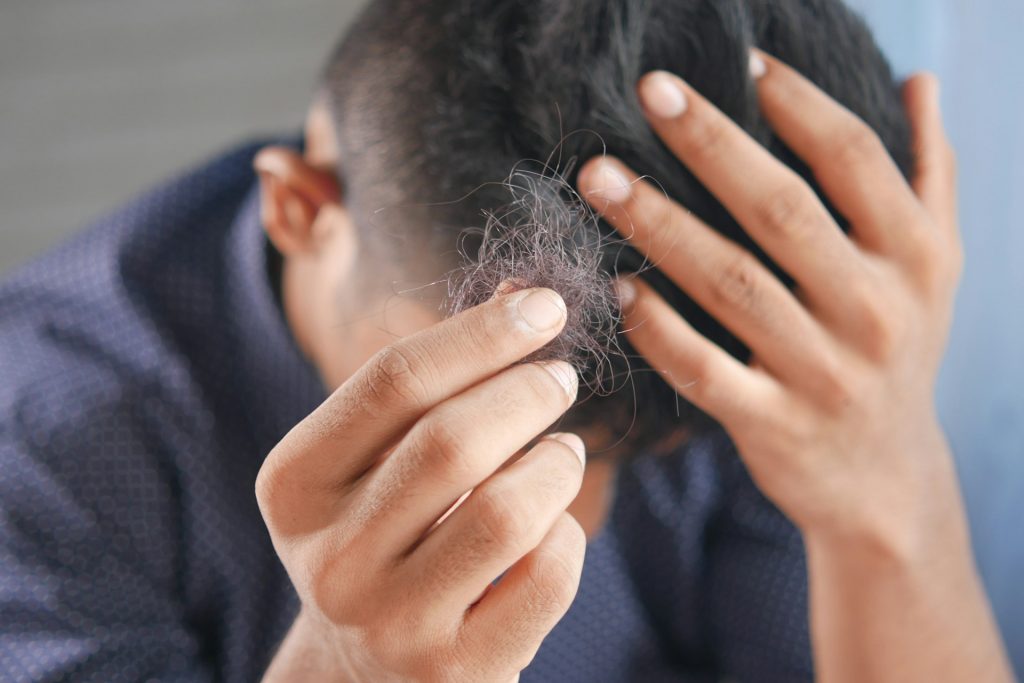
Cortisol disrupts the growth cycle of the hair follicle, which is what keeps the hair growing and healthy.
But this is very different from male pattern baldness. With male pattern baldness, it follows a very typical pattern, starting with the hairline receding at the temples, thinning over the top and crown, in a very predictable way. And the remaining hair is typically still of good quality.
If the hair loss or thinning is cortisol-driven, it’s going to be diffuse, thinning kind of evenly all across the head. You’ll probably notice excessive shedding. You find it in the sink, you find it in the shower, and you can often notice it as you’re brushing your hair.
Another important difference: while male pattern baldness is primarily genetically driven, cortisol-related hair loss is physiologically driven, and therefore it is often possible to stabilize it and even reverse it if you fully handle the root cause.
Sign #8: Easy Bruising
We’ve already covered how cortisol breaks down muscle protein to generate glucose, but muscle isn’t the only place it pulls protein from. It also turns to collagen, particularly in the skin and bone.
The bone collagen is harder to access because it’s bound up with minerals, but skin collagen is more available, so that’s where the body goes.
Cortisol is essentially telling the body: whatever you have to do in this crisis, just make sure you find the protein somewhere. Burn bridges, break down tissue, I don’t care, we have to have this.
As a result, with excess cortisol, you end up with thinner and less elastic skin. It looks kind of like parchment, dry and brittle, and it also bruises much more easily than it used to.

Sign #9: Red or Purple Stretch Marks
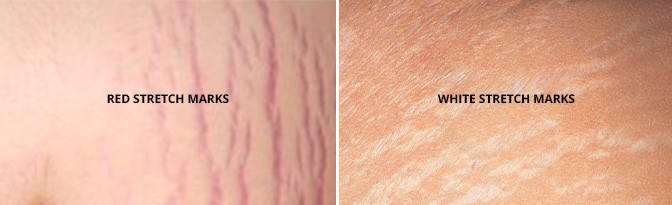
Stretch marks linked to cortisol tend to show up on the abdomen or the thighs, and they often have a reddish or purplish color rather than the silver-white of older stretch marks.
What’s happening is that cortisol causes selective fat deposits on the abdomen, and as that area grows, stretch marks can develop.
At the same time, these stretch marks get worse because the body doesn’t have a proper protein supply, since that protein is being converted to glucose instead of being used to maintain tissue.
So the skin is expanding while the body lacks the resources to hold it together properly, and those marks often take on a reddish or purplish color.
Sign #10: Slow Wound Healing
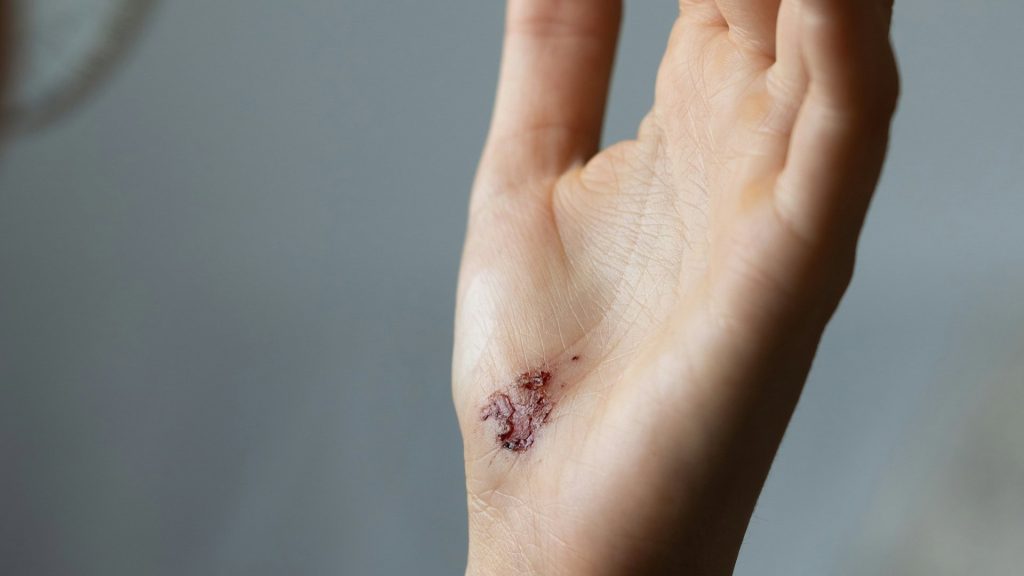
This is one of the more serious signs, and it typically only shows up after cortisol has been chronically elevated for an extended period of time.
Again, two things are happening here.
The first is that neurological, instantaneous sympathetic response, your fight-or-flight.
Just like your posture changes immediately under stress, your body’s priorities shift too. Healing and repair, procreation, and your immune system are all long-term important things, but they’re not important in the moment you have an emergency.
So whenever you have a stress response, all of those long-term health functions take a backseat.
The neurological response does this mostly with electrical signals, instantly, by changing how it allocates blood flow.
And cortisol does the same thing at the biochemical level, through chemistry.
Both of these mechanisms are sending the same message: healing wounds is a long-term thing we don’t really care about right now.
When stress is never-ending, “later” never comes.
The Bottom Line
What’s important to understand is that the body’s hormones are natural. Insulin is a natural hormone. Cortisol is a natural hormone. They help us stay alive when we live a balanced life.
But when our sleep, our diet, or our stress levels are off the charts, these hormones get pushed to a point where they start becoming destructive.
It’s not the hormones themselves that are the problem; they’re just indicators of what we’re doing.
These 10 signs are your body trying to tell you something. And the good news is that because most of this is driven by lifestyle, a lot of it can be addressed, and even reversed when you get to the root cause.
I’ve talked about foods that you should incorporate into your diet to lower your cortisol levels.