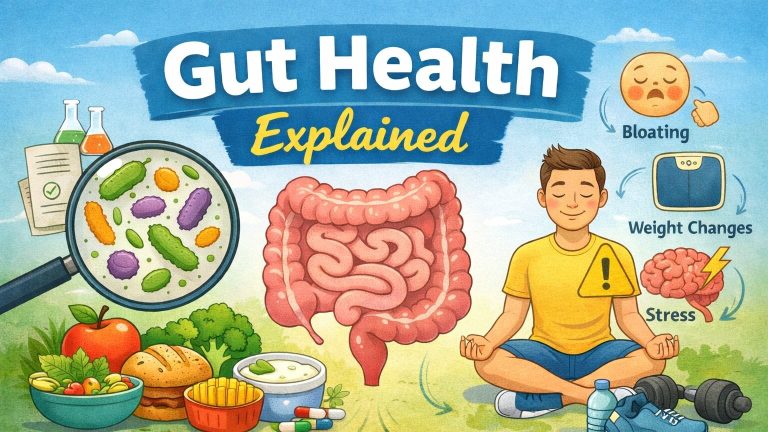

Bloating is uncomfortable, heavy, and frustrating, especially when you feel like you’re already doing everything right with your diet.
So let’s talk about why bloating even happens, what’s normal and what isn’t, and what you can actually do about it, both in the moment and long-term.
Why Does Bloating Even Happen?
Bloating basically comes from two possible main reasons. Either it’s a medical condition, or it’s just air or gas.
That air or gas either gets into your stomach because you swallow air while eating, because food is moving too slowly through your system, or because bacteria in your gut are fermenting certain carbs, which is not necessarily a bad thing.
So is all bloating bad? No, some bloating is completely normal.
Your stomach is often not actually bloated, it just looks that way because you’ve just eaten and there’s literally volume of food sitting in your stomach.
This especially applies if you eat a low-calorie, high-volume food like salad. I mean, think about it: if you have that huge bowl of salad in front of you and you eat the whole thing, of course your stomach isn’t going to look as flat as before you ate.
Similarly, if you eat certain foods like beans, you’ve probably noticed that you tend to bloat more easily, and that’s because your gut bacteria are fermenting the carbs from those legumes.
But that bloating isn’t a bad sign, because those foods are actually really healthy, as long as the bloating isn’t too much or too persistent.
Bloating becomes a concern when it’s:
- Uncomfortable or painful
- Persistent throughout the day
- Present even though you haven’t eaten in the last one or two hours
If any of those sound familiar, something might be off, and that’s what we’re getting into next.
Common Causes of Problematic Bloating
1. Food Sensitivities and Intolerances
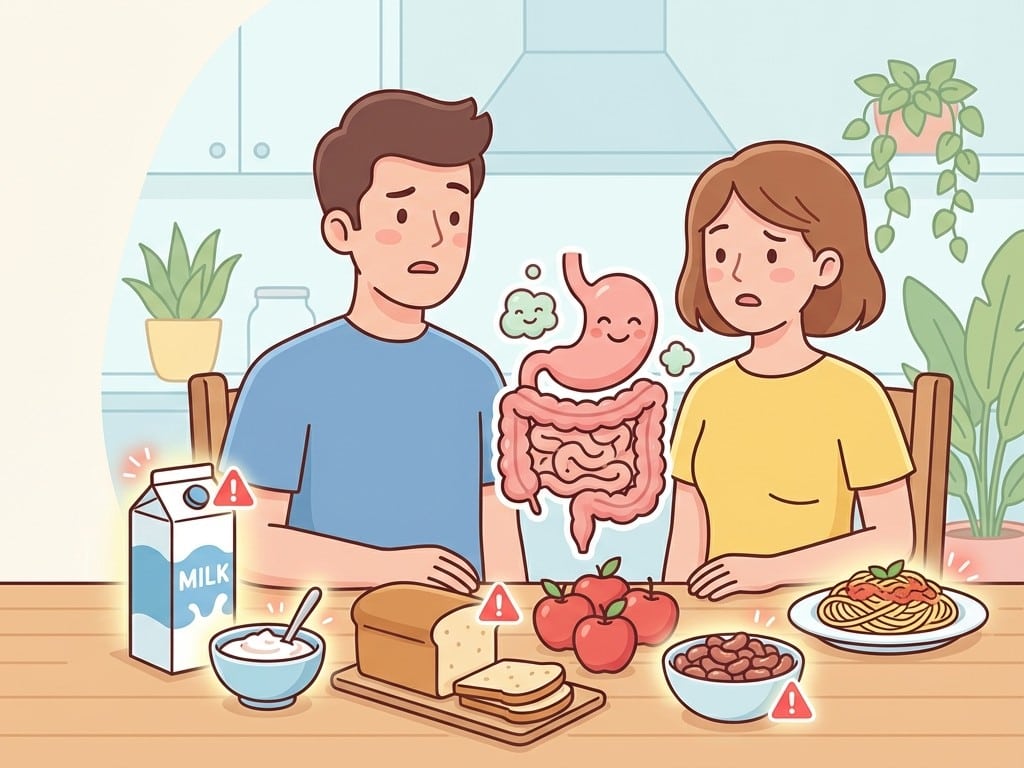
One of the most common causes of bloating is when your digestive system lacks the enzymes needed to properly break down what you’re eating. Some common ones you might not know about:
Lactose intolerance is the most well-known example, where your body lacks the enzyme lactase. And it’s so incredibly common, approximately 68% of the world’s population has some degree of difficulty absorbing lactose.
Especially now with all the protein craze going on and so many people having a yogurt bowl for breakfast (which is a great choice, plain Greek yogurt is honestly a little superfood), a lot of people are unknowingly triggering daily bloat.
Gluten sensitivity, on the other hand, I feel, has been a bit overrated. So many people go gluten-free, but actual gluten intolerance is pretty rare, around 6%, and that’s not even counting celiac disease, which is much lower. That said, it does exist, so it’s not completely off the table for you.
Fructose intolerance is one that so many people aren’t even aware of, even though it affects about 30 to 40% of the world’s population. This one can make super healthy foods like apples really problematic for you.
FODMAPs are so relevant if you struggle with bloating; it’s complex enough to deserve their own section, so keep reading.
2. Gut Bacteria Imbalance (Dysbiosis)
If you keep eating foods your body can’t tolerate, not only can you get direct digestive issues like bloating, but it can also hurt your gut microbiome and cause a bacterial imbalance, also known as dysbiosis.
In your gut, you have good bacteria and bad bacteria. The good ones we want. A healthy gut microbiome is important for so many things, including not being bloated.
When the bad bacteria outnumber the good, you get increased gas production and inflammation. And those bad bacteria are especially fed by processed foods and sugar.
The goal is simple: feed the good bacteria, starve the bad ones.
3. Eating Too Fast
If you eat fast, you’re likely swallowing a lot of air, and that air ends up in your stomach where it definitely doesn’t belong.
On top of that, if you’re not chewing enough, the food particles entering your gut are much bigger and harder to digest, which leads to fermentation and gas production in your gut.
Chewing your food thoroughly is genuinely one of the most underrated things you can do for your digestion.
4. Hormonal Changes
Hormones play a role too, espacially for women.
- Progesterone rises during the luteal phase (between ovulation and your period) and slows digestive motility, meaning how quickly food moves through your gut
- Estrogen fluctuations affect water retention and gut sensitivity
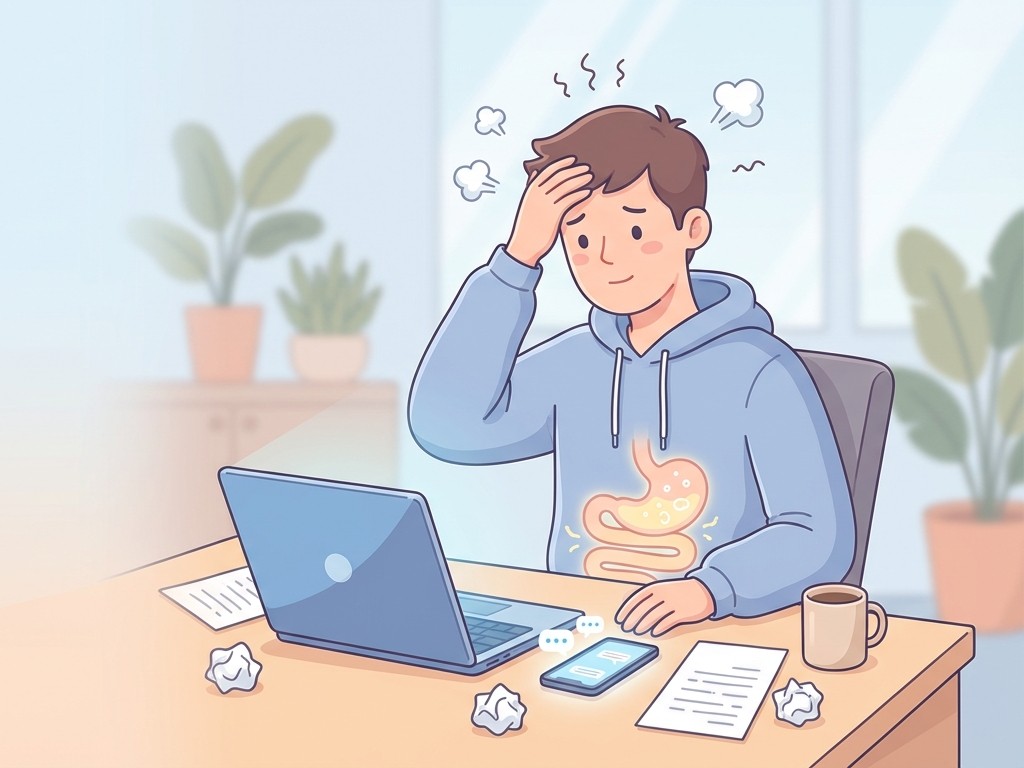
5. Stress
Chronic stress raises cortisol(your body’s stress hormone), which disrupts gut motility and negatively impacts your microbiome. When food moves too slowly and sits in your gut too long, fermentation increases and with it, gas.
A little stress is fine. But chronic stress? Not good for your gut or really anything else.
If fear and anxiety are part of your daily stress load, I’ve talked about strategies to eliminate fear and anxiety, which can help regulate your stress response naturally.
Quick Fixes: What to Do When You’re Already Bloated
1. Foods and Drinks That Help
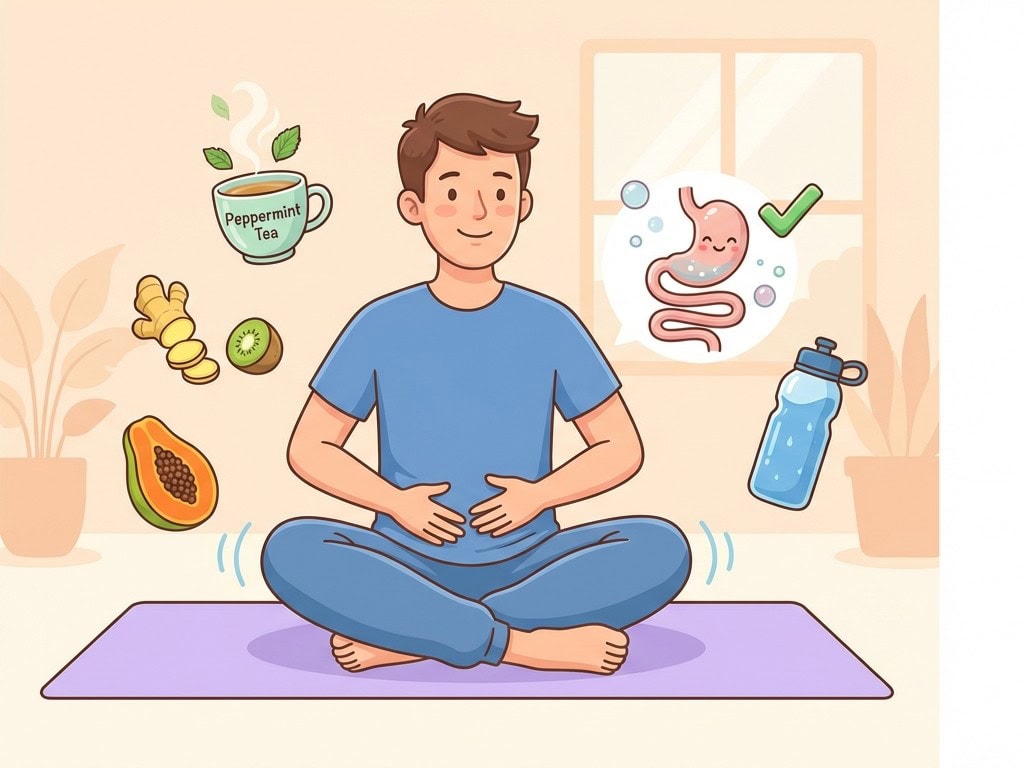
Papaya and kiwi: They both contain enzymes that help with digestion, particularly with breaking down protein, which is a common bloating trigger
Ginger: Honestly one of nature’s best remedies. It contains compounds that stimulate digestive enzymes, making digestion easier, and it’s also really anti-inflammatory, which helps reduce gut inflammation.
Drink it as tea, add it to food, take it as a clean supplement, or if you’re really committed, eat it straight
Peppermint tea: It helps release gas and relaxes digestive muscles to ease cramping. Experts suggest drinking it between meals for the best effect
Water: Always, always stay hydrated. It matters for everything, including digestion
2. Movement and Physical Relief
Belly massage: That instinct you have to rub your stomach when you’re bloated? It’s actually legit. It helps relieve both the gas and the cramping.
Gentle stretching: Think spinal twists, laying down in child’s pose, or just pulling your knees toward your abdomen. It’s comfortable and the gentle pressure helps move the gas along.
Walking: Especially after a meal, this is genuinely one of the best things you can do.
⚠️ Avoid intense exercise when you’re already bloated — it can actually make things worse in the moment. Stick to the gentle stuff until it passes.
Long-Term Strategies to Reduce Bloating
1. Eat Slower
This is probably the easiest thing you can do, and most people definately need to do it. Here’s how:
- Chew each bite around 30 times — adjust for softer foods, but the denser and harder the food, the more chewing it needs
- Put your fork down between bites — yes, it’s annoying when you’re hungry. But you will get used to it.
Not only does eating slower help with digestion and reduce the air you swallow, but it also helps prevent overeating because it gives your brain time to receive your fullness signals, which take about 20 to 30 minutes to arrive.
If your meal is done in five minutes, your brain hasn’t even caught up yet. Try to give yourself at least 20 to 30 minutes to eat, whenever you can.
2. Understand Your FODMAPs
FODMAP stands for fermentable oligosaccharides, disaccharides, monosaccharides, and polyols, you don’t need to remember that. What you do need to know is that FODMAPs are certain fermentable carbs that some people have a really hard time digesting.
Common high-FODMAP foods include:
- Apples and watermelon
- Onion and asparagus
- Wheat and rye
- Honey and agave
Yes, foods you’d normally think of as totally healthy. And they are, but some people’s guts just can’t handle them.
How to figure out if FODMAPs are your issue?
Elimination diet (the gold standard): Cut out all high-FODMAP foods for 2 to 6 weeks, then systematically reintroduce them one by one to figure out which ones are triggering your symptoms.
This diet approach can be very long, I won’t lie, but it’s the most thorough approach and what most doctors will recommend since there’s no actual test for it.
Food journal (less intense): Don’t track macros or calories, just write down what you ate and how you felt afterward. After a week or so, patterns usually start to show up. This can also help you spot reactions to other foods like gluten.
3. Reduce Stress
Chronic stress directly impacts your gut function and your gut bacteria, and it’s worth taking seriously. The good news is you don’t have to overhaul your life.
Small things that genuinely help:
- Three deep breaths before meals
- 5 to 10 minutes of breathwork a day
- Getting enough sleep
- Regular movement even just walking or stretching
That’s it. It doesn’t have to be a big production. Even these small habits can make a real difference for your cortisol levels and, with that, your gut health.
4. Watch Your Portion Sizes
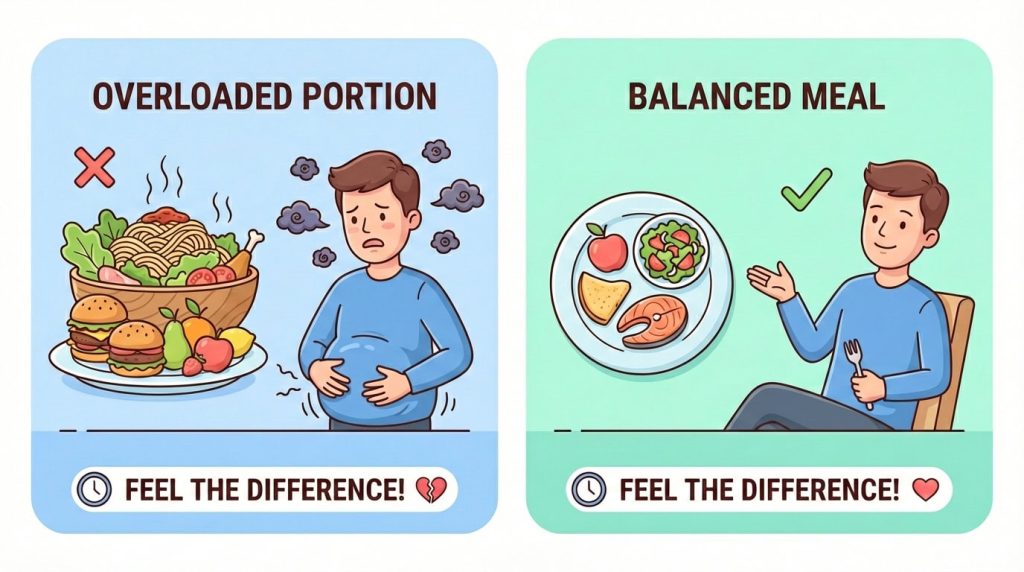
Sometimes you’re just putting too much work on your gut at once. Eating smaller portions can help.
And this applies even to healthy, high-volume foods like salads and vegetables. Too much of a good thing can still be a lot for your digestive system to handle.
Just try to find your sweet spot and see if it makes a difference for you.
5. Improve Gut Health Overall
This is honestly one of the most powerful long-term things you can do for your overall health. Here’s where to start:
Eat more fermented foods
Yogurt (if you tolerate lactose), sauerkraut, kimchi, miso, incredible for your microbiome. Just make sure they actually contain live, active bacteria.
A lot of sauerkraut and kimchi sold on non-refrigerated shelves has been pasteurized, meaning the bacteria is dead and won’t do much for you. Look for “live bacteria” on the label, or make sure it doesn’t say pasteurized.
If you’re just starting with fermented foods, start slowly, start with a little bit daily and slowly increase. Give your gut time to adjust.
Eat 30 different plant foods per week
The more variety you put into your gut, the happier your gut bacteria will be. And this includes herbs, spices, nuts, seeds, and grains, not just fruits and vegetables.
Eating across different colors also ensures you’re getting a wide range of micronutrients, since color is often an indicator of what’s inside the plant.
Cut the artificial sweeteners
This one’s really important. Products labeled “zero sugar” can seem like the healthy choice, but artificial sweeteners like aspartame and sucralose have been shown in research to be genuinely harmful to your gut health, and possibly to your weight too, although the research is still evolving.
Even the “healthier” natural sweeteners still contain a lot of sugar, so try not to overdo sweetness overall.
Here’s the good news though: your taste buds are incredibly adaptable. The less sweet you eat, the less sweet you’ll want. It takes some getting used to, but it really does get easier and then it just becomes natural.
If you want to understand what sugar is really doing inside your body, read this post about sugar and what happens to your body when you quit it.
When to See a Doctor
If your bloating is:
- Severe
- Painful
- Persistent
- Accompanied by other digestive issues
Please get checked out. Most bloating is harmless, but it’s always better to be safe.
Bottom Line
Bloating doesn’t automatically mean something is “wrong.” Sometimes it’s just digestion doing its thing.
But if it’s frequent and uncomfortable, you don’t have to just live with it.
Most of the time there’s a real reason behind it, and real things you can do about it. Start with the basics, pay attention to your body, and give your gut a little more love.
Disclaimer: This content is for educational purposes only and is not intended as medical advice. If you’re experiencing persistent, severe, or painful bloating or any other concerning symptoms, please consult a qualified healthcare professional or your doctor for proper evaluation and guidance.