Dietary fiber is one of the most underrated nutrients in modern diets, yet it plays a major role in overall health. Research links it to reduced risk of heart disease, type 2 diabetes, and even some types of cancer.
It also supports a healthy gut microbiome and helps keep your digestive system functioning properly.
Despite these benefits, many of us don’t get enough fiber each day. While we often focus on eating more protein, drinking enough water, and exercising regularly, fiber deserves just as much attention.
What Is Fiber?
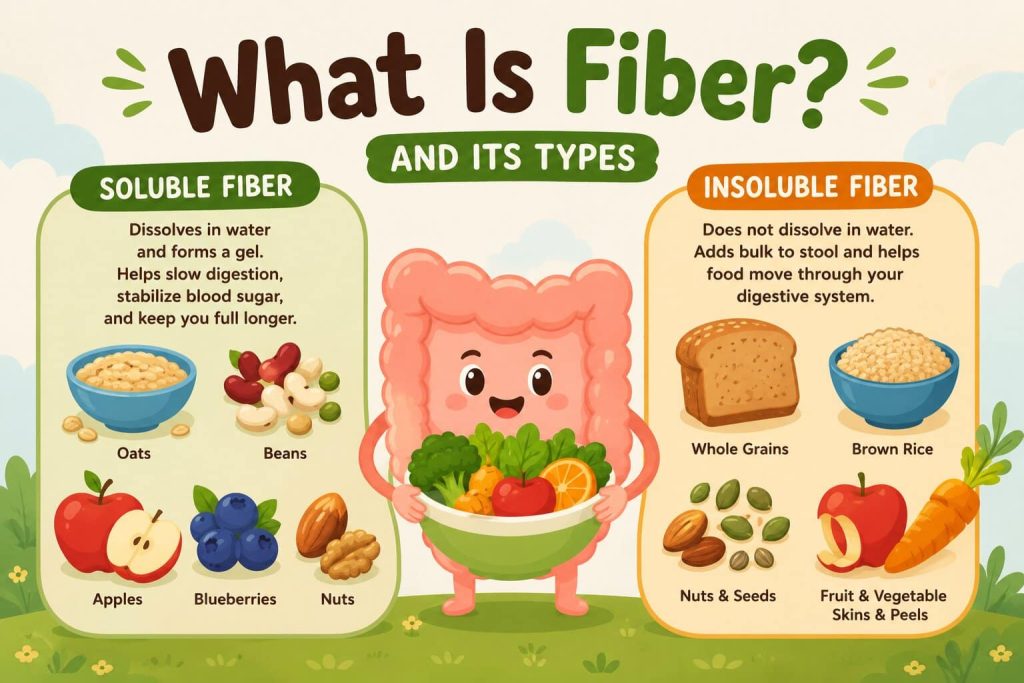
Fiber is a plant-based carbohydrate that passes through your digestive system largely intact. Rather than being broken down, it attaches to other substances along the way, helps keep things moving, and removes carcinogens as it travels through your body.
There are two types of fiber and both matter.
Soluble fiber dissolves in water and forms a gel-like substance as it’s digested. This slows digestion down, which is exactly why fiber keeps you feeling full longer.
Foods rich in soluble fiber include:
- Nuts
- Oats
- Beans
- Lentils
- Apples
- Blueberries
Insoluble fiber doesn’t mix with water. It adds bulk to stool and helps food move through the digestive system more efficiently.
Insoluble fiber found in:
- Whole grains
- Brown rice
- Nuts and seeds
- Fruit skins and peels
- Vegetable skins
Health Benefits of Fiber
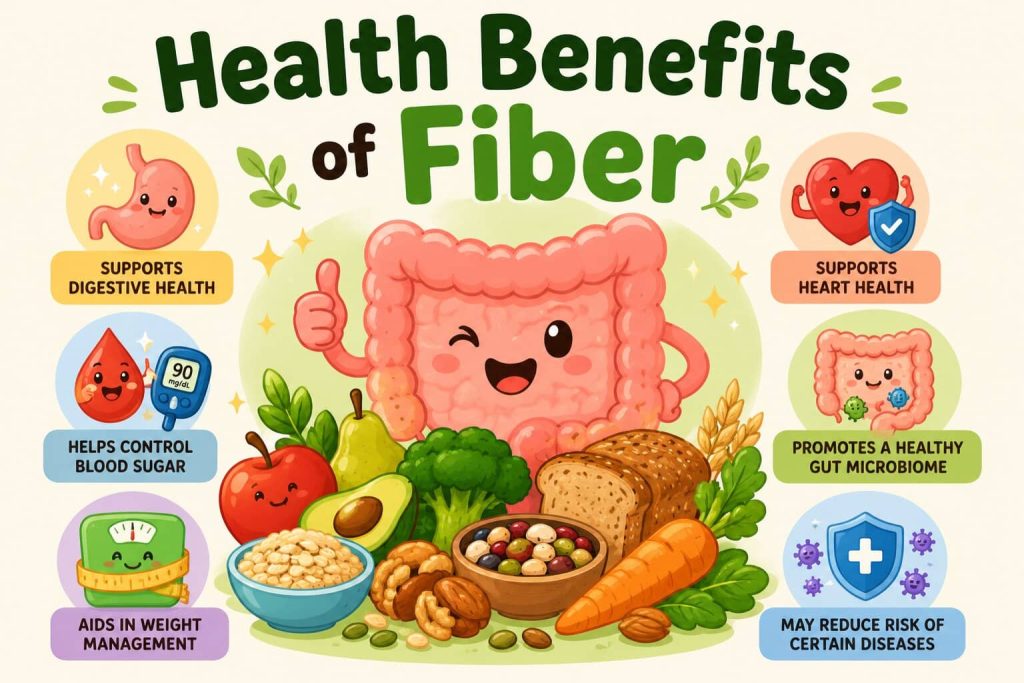
Fiber does a lot more than just keep your gut healthy. Here’s what it’s actually doing for you:
Regulates blood sugar. Fiber slows how quickly sugar gets absorbed, which reduces your risk of diabetes and obesity.
Keeps you full longer. Because digestion slows down, you’re not going to be craving food as often or feeling sluggish right after a meal.
Helps with weight. Less hunger means fewer calories consumed, and fiber also helps suppress the hormones that make you feel hungry in the first place.If you’re trying to build muscle without putting on unwanted fat, these high-protein options are perfect.
Supports colon health. Fiber keeps your digestive system working regularly and helps remove carcinogens as it passes through. If you’re dealing with bad digestion and constant bloating, this guide should help you find some relief.
Supports heart health. Studies have shown that higher fiber intake is associated with a reduced risk of cardiovascular disease, making fiber an important part of a heart-healthy diet.
So if you’re eating home-cooked meals, avoiding processed foods, drinking your water, and getting your daily exercise, but you’re not focusing on fiber, you’re missing out on a huge piece of the puzzle and making your body work harder against all that other effort you’re putting in.
How Much Fiber Should You Be Eating?
- Women: 25 grams per day
- Men: 38 grams per day
These should come from naturally occurring foods, not just a fiber pill or a glass of Metamucil. There are so many tasty and easy ways to hit these numbers every day.
One thing to keep in mind: if your body isn’t used to a high fiber diet, don’t go from zero to a hundred overnight. Too much too soon can cause bloating and cramping. Build up gradually and let your body adjust.
Best High-Fiber Foods to Add to Your Diet
Legumes
Legumes are some of the most fiber-dense foods out there, and they’re also incredibly affordable.
1. Lentils — 15.5g of fiber per cooked cup. Great in salads, soups, and as a side. Also a fantastic source of plant-based protein, so if you’re vegan you’re probably already eating these.
2. Chickpeas — 12.5g of fiber per cooked cup. Packed with protein and helpful nutrients, and great for weight management because of the high fiber to calorie ratio.
3. Kidney beans — 11g of fiber per cooked cup. Just like lentils, they’re a great way to get fiber, protein, and essential nutrients all in one cost-effective food.
Grains and Seeds
4. Oats — 16.8g of fiber per cup of raw oats. That number goes down a little once cooked and expanded, but it’s still incredibly high. Go for steel-cut oats, old-fashioned oats, or rolled oats since they’re the least processed and hold onto the most fiber content.
5. Chia seeds — 10.6g of fiber per ounce. These are genuinely power-packed. Just one ounce and you’re already nearly halfway to the daily goal for women.
6. Quinoa — 5.2g of fiber per cooked cup. High in protein, gluten-free, and a great all-around grain to add to your rotation.
7. Brown rice — 3.5g of fiber per cooked cup, compared to just 0.6g for white rice. The difference comes down to the outer husk that’s still intact in brown rice.
8. Whole grain bread — Look for at least 3g of fiber per slice. This is important: a lot of breads labeled “whole wheat” actually contain very little fiber, so always check the label. Dave’s Killer Bread is a great option if you’re looking for something that’s both delicious and genuinely high in fiber and protein.
Fruits
9. Avocado — About 13g of fiber per whole avocado, roughly 5g per serving. It contains both soluble and insoluble fiber, plus healthy fats. Pretty hard to beat.
10. Raspberries — 8g of fiber per cup. Low in sugar, high in manganese and vitamin C, and very nutrient-dense.
11. Pears — 5.5g of fiber per medium pear, especially when you eat the skin. One of the best fruits out there for fiber content.
12. Apples — 4.5g of fiber per medium apple. The soluble fiber in apples contains pectin, which is particularly great for keeping you fuller for longer.
13. Strawberries — 3g of fiber per cup. You also get a ton of antioxidants and vitamin C, making them one of the most nutrient-dense foods for their size.
14. Bananas — 3.1g of fiber per medium banana. A great one to freeze and throw into protein shakes for that added fiber boost. They do have a higher sugar content compared to berries though, so they work really well as a natural sweetener.
Vegetables
15. Sweet potatoes — 4g of fiber per cooked cup. Make sure you eat the skin too. It’s highly nutritious and gives you extra insoluble fiber and added nutrients on top of what’s already in the flesh.
17. Brussels sprouts — 4g of fiber per cup. Also high in cancer-fighting antioxidants, potassium, and other vitamins and minerals.
18. Beets — 3.8g of fiber per cooked cup. On top of the fiber, beets help regulate blood pressure and reduce inflammation. Here are more anti-inflammatory foods you might want to check out.
19. Broccoli — 2.5g of fiber per cup. A cruciferous vegetable that’s also high in protein and cancer-fighting compounds. Hard to find a more all-around nutritious vegetable.
20. Carrots — 2g of fiber per medium carrot. Low in calories and high in essential vitamins and minerals. A great everyday snack.
Nuts
21. Almonds — 3.4g of fiber per ounce. One of the highest fiber nuts you can snack on.
22. Dark chocolate — 3.1g of fiber per ounce. Yes, really. So the next time someone questions your snack choices, you have science on your side.
23. Pistachios and walnuts are also solid high-fiber options worth adding to your routine.
The Bottom Line
Fiber is one of the simplest ways to improve your overall health. It’s great for digestive health, colon health, weight loss, and general positive body functioning and blood sugar levels.
It works quietly in the background, making everything else you’re doing for your health work better.
The goal is 25 to 38 grams fiber a day from real, naturally occurring foods. Start adding these foods into your daily routine where you can, build up gradually, and your body will thank you for it.